Adapted from a talk given as part of Chester Heritage Festival 2024
There are lots of ways to become an archaeologist. I’m sure you can think of one, perhaps several. But I want to give you another. Sit alone on a chair in an empty room in an empty house with your eyes closed. Concentrate your entire consciousness within your own body. Staying as still as possible, imagine a ball of energy buzzing at the very top of your head. Move that ball around your body, up and down each arm and leg, finishing with it in your chest. Now expand your awareness to the chair, its hardness, the points of contact between it and your body. Maybe send your ball of energy there. Staying as still as you can, now focus on the connection between your feet and the floor. Imagine the floor stretching out from you in every direction. You now have a very basic understanding of the relationship between your body and two things you are in contact with, the chair and the floor. Let’s go further. Again staying still, expand your consciousness to the walls of the room you are in, feel the distance between you and them, their texture, coldness. Now expand to the ceiling. Feel the difference between your consciousness being entirely within your body and, now, being in a box, enclosed on all sides. Populate the room with its furniture, some near, some far. Feel its proximity. Reach your consciousness out to different objects. Pause. Open your eyes. Stand up. Move around the room. Appreciate the difference between the room as it appeared within you and as it now appears, without. Be aware of your own body standing, moving, touching. You are becoming an archaeologist.
Archaeology is a lot of different things. It is a series of methods for understanding the past. It is the things we find underground when we excavate. It is the lifetime of changes seen in an old building. It is a complex world of practitioners and theorists, many of whom are keen to find new things for archaeologists to do and new ways for archaeologists to do them. There are kinds of archaeology that are incredibly specialist, that rely on access to particular pieces of equipment, and there are kinds of archaeology that we can all do in our heads. I want to talk about the latter. Because archaeology is ultimately all about the relationship between people and things. Most archaeology uses things to tell us about people in the past. But we can also work to differently understand things in the present. How you, as an individual, feel holding an object or standing in front of it, is an important kind of archaeology, one that can take us to a whole load of different places if we are happy to travel some less-trodden paths. For me, this democratises what can feel like a distant, specialist practice. It adds to those more specialised forms of archaeology that take years of training an archaeological sensibility that you can employ anytime you visit a historic site or walk around a town. To be honest, this is a kind of archaeology that will enrich your experience of sitting in your garden and for me that’s a great use of archaeology. It makes it for everyone and makes it useful in your daily life. That, to me, is very, very exciting.
Let’s address three spaces in which archaeology and the senses, or sensory archaeology, or archaeological sensitivity can change how we understand the world. I want to discuss how we can use our full range of senses to understand things. Then I want to talk about whether things have senses and autonomy, and lastly I want to talk about what happens between those two spaces, about our mutually-constitutive relationships with things and how we might use those to be differently in the world.
To discuss the first of these spaces, I want to refer to the sensory heritage trail running at Chester Cathedral as part of Chester Heritage Festival. I have been part of developing this activity and sensory heritage has been an interest of mine for a long time. My interest in this area has developed from a frustration about just how much we privilege the visual when we communicate about historic buildings (and by extension much archaeology and heritage). When you go to a historic building, you look at it! That’s normal. It’s very important that we do. But I feel we miss something when we do not routinely bring other senses to bear in our understanding. When we look at a building like Chester Cathedral, we see architecture, history, stratigraphy, memorials, maybe signage, both historic and modern.
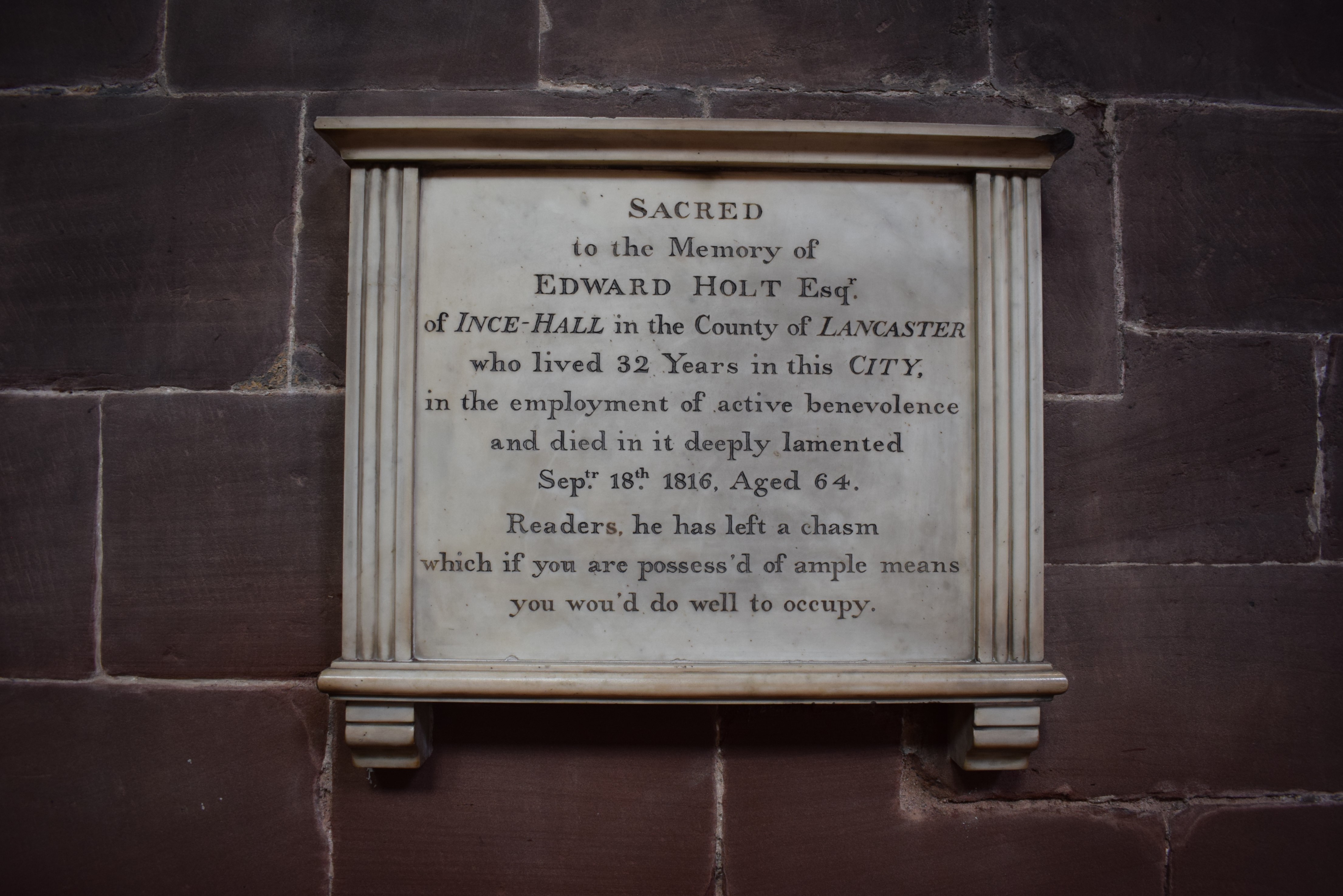
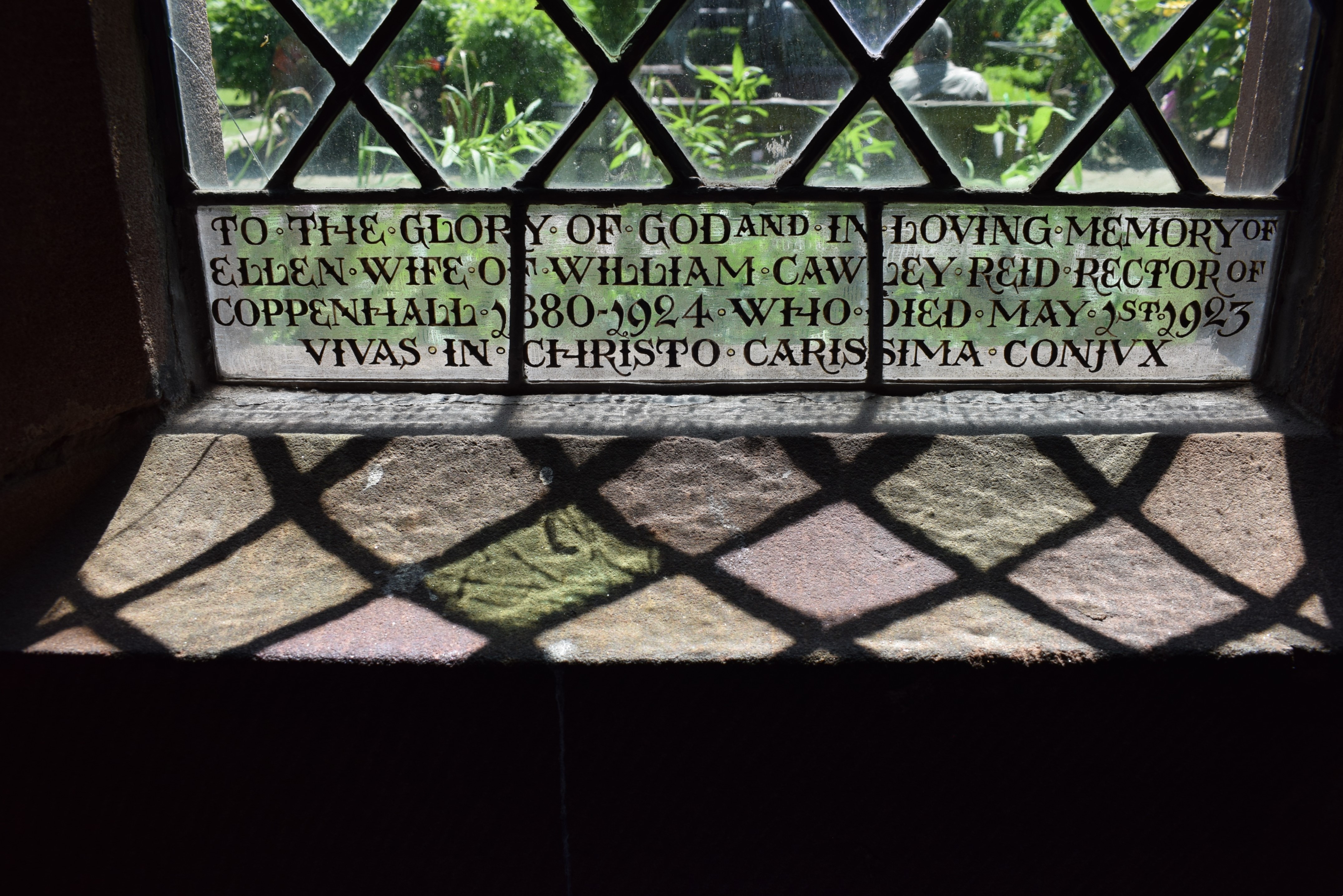
That’s fine. But we can’t begin to understand the experience of being in that space, today and then, via interpretive steps, in the past, using sight alone. Buildings archaeology is not architectural history. What the archaeology part brings to buildings is that our end point is not just understanding the building, though we do that along the way, but the lives of people inside it, and for that we need more than our eyes. The Cathedral’s sensory heritage trail consists of a series of locations where participants are encouraged to use non-visual senses to understand the space they are in, or to use sight in a different way. The latter makes use of the stained-glass windows around the cathedral cloister.

Here, rather than simply look at the windows in terms of content and artistry, participants are encouraged specifically to move around while looking and to see how the windows change as their relationship to light sources changes.

Different aspects of windows, and of anything, can be better appreciated in light or in dark, and sometimes being still to look at something isn’t the way to appreciate it at all. Kinetic views are those which are appreciated in motion and, of course, most of what we experience we experience in motion of some kind.

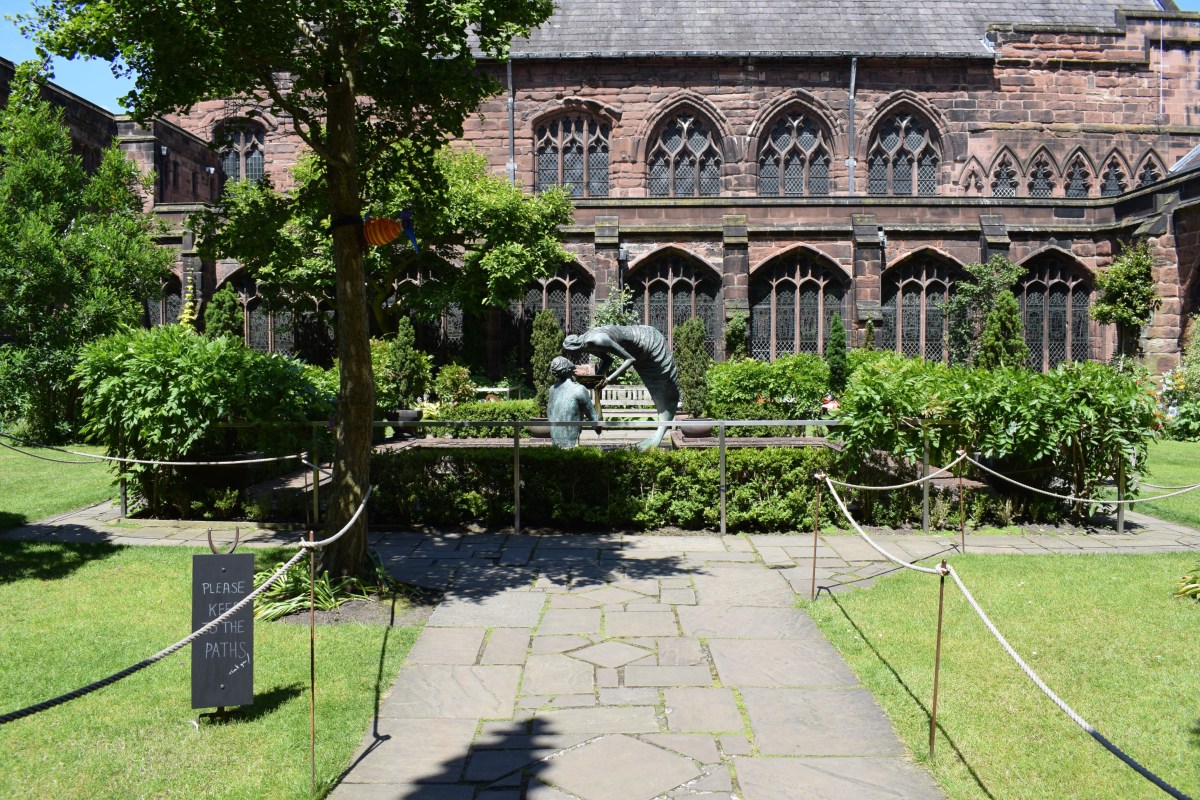
So, as well as standing looking at one window, for instance, we can walk along one whole stretch of cloister and experience a series of windows interspersed with stonework. The other aspect of the kinetic view that makes this a different kind of visual experience is that the usual experience of many things is within peripheral rather than central vision. As much as you should absolutely experience Chester Cathedral by going and looking at different bits of it for hours, you can also gain something by walking around it not focussing on anything in particular. Even within visual experiences then, the most common, we can gain something by looking in a different way, by widening the range of sensory experiences with which we seek to understand a building or place. Two of the stations on the Cathedral sensory trail focus on sound, asking participants to stop and listen, one inside the cathedral and the other in the cloister garth.

A focus on sound is an ideal opportunity to de-prioritise the visual very directly by closing your eyes and listening. Standing outside in the cloister garth with your eyes closed gives you the chance to concentrate on a whole soundscape. Some of the sounds are ones you might expect, others not. There will, of course, be sounds that might have been present in the Cathedral hundreds of years ago and others that are distinctly modern. One feature of sound is that it can travel a long way and it can be relatively easily restricted.
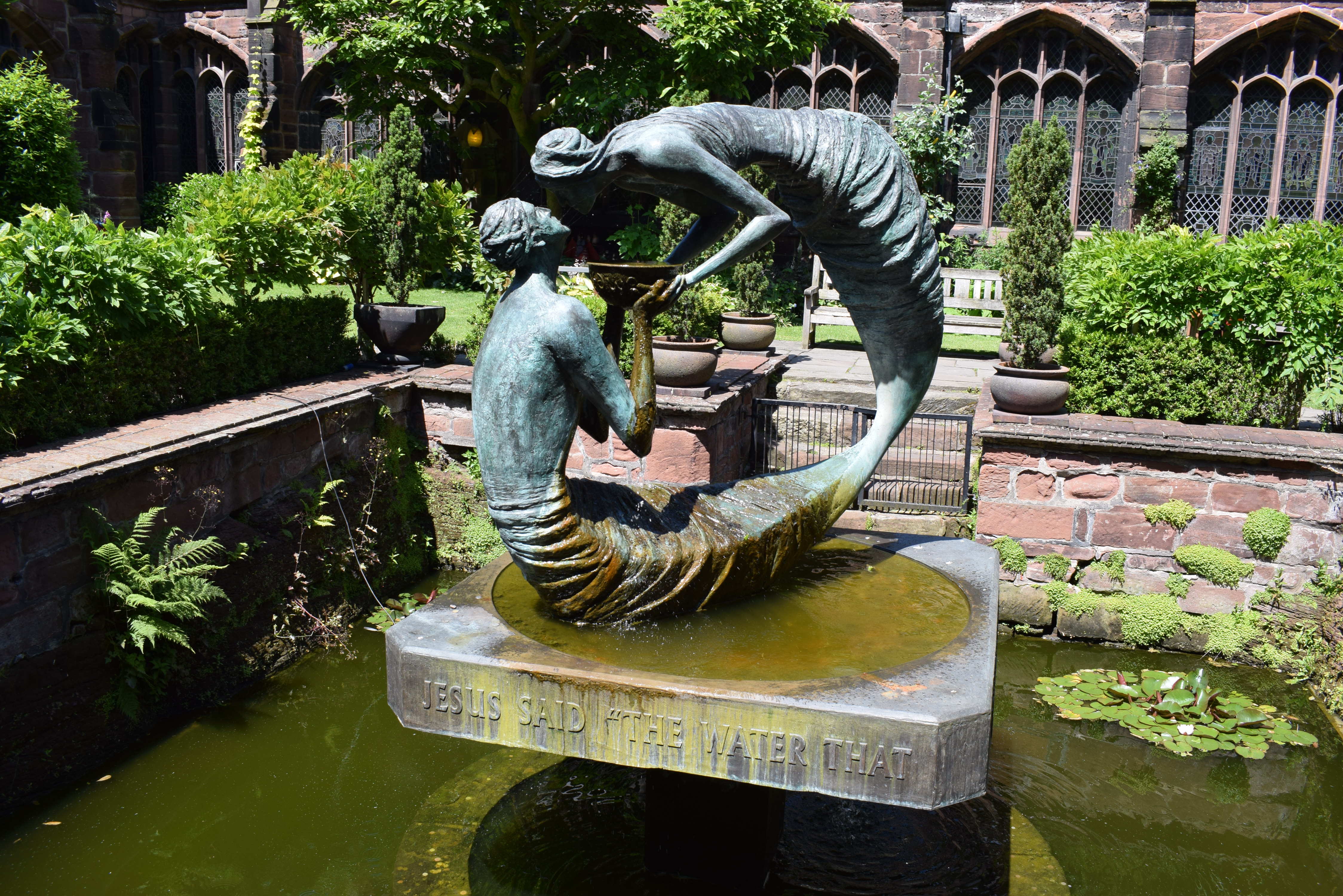
Outside in an unroofed space, you can hear the sounds of the garth itself, water, wind, footsteps, but also the sounds of Chester beyond. It’s a particularly interesting feature of the soundscape in a space like the garth that it includes components from such a wide range, when we might usually imagine it to be a quiet, introspective place. If I can just bring in an experience of another site, I did a workshop some years ago at a volunteer run cinema called The Cube Microplex in Bristol. It was a contemporary archaeology workshop and people taking part, who all worked there, were given different things to investigate in the space.

One pair, both musicians, were tasked to investigate the building’s sounds, but when I went to check up on them to see how they were getting on, they complained that they didn’t know what to do, that there were no sounds to investigate. I suggested that to get them started, they each just make a list of the sounds they could hear. Imagine their surprise when having done so they had completely different lists. So as well as listening, we should talk about what we can hear because we may have contrasting aural experiences of the same places and can quickly conclude that there must have been multiple sensory experiences of places in the past too.

Inside the cathedral, participants on the sensory heritage tours have had the opportunity to listen to live organ music. This is a typical part of the sound inside a cathedral, but here those listening will be encouraged to move around, to hear how the music sounds different in different locations, or in motion. We can contrast how organ music might fill the space with the ways in which it doesn’t, the acoustics of the Cathedral space.
Acoustic mapping is really interesting kind of buildings archaeology where sounds are recorded inside buildings from different locations and an acoustic signature developed. It is then possible to insert sounds into that digital map to hear how things might have sounded historically in the space, a really interesting and fun thing to do. Thinking about acoustics in even a basic way can add to how we understand the experience of being in a space.
Back in 2012, I went to an Ed Sheeran gig in Thetford Forest. It was perfectly fine. But one thing I noticed during the course of the evening was that in that huge open space with professional sound engineering, the music sounded best in the portable toilet block. Something about the way the sound reached then bounced around in that box created the perfect conditions for listening to Ed Sheeran. This is interesting archaeology, a non-visual examination of the space that tells us something about its physical details and the experience of being in it that could not have been gained in any other way than being there, listening, and contrasting sounds in different spaces. So to sight we add sound as we continue to use more senses to build archaeological understanding.
There is also, of course, touch. Digging archaeologists use touch all the time. When we trowel buried surfaces, sometimes the only way we can tell the difference between two different deposits is by a minute difference in feel between them, felt through the scraping of a trowel, that slightly higher percentage of clay or silt that marks out a deposit as a different historical event. Buildings are easy to touch, they are everywhere.

Walls, floors, columns, the sensations we get from touching buildings is a great addition to just looking at them. Sometimes touch is the only way to investigate as elements are intentionally hidden from view, for instance the stone columns in Durham Cathedral of which only the parts you can see are polished smooth. Stick your hand behind and its rough stone. Through touch we can also appreciate the difference between older and newer, original and replacement stone, or feel marks made on building materials. I’m also a big fan of feeling stone walls. Their graininess, coldness, sometimes their moistness, and the ways in which different blocks have eroded tells you something about the building but it also helps take that building back to the geological formations that were extracted and shaped to form the parts of which the building is made. Next time you are in a historic site where you’re not going to get in trouble for doing it, gently place your palm flat on a wall and see what you can feel. Move it around a little. Where does the feeling take you? You’re doing archaeology.
Smell is perhaps harder, though an important part of our experiences of place. On the sensory heritage tour, we have old books to smell, but for me the great cathedral smell is candles.
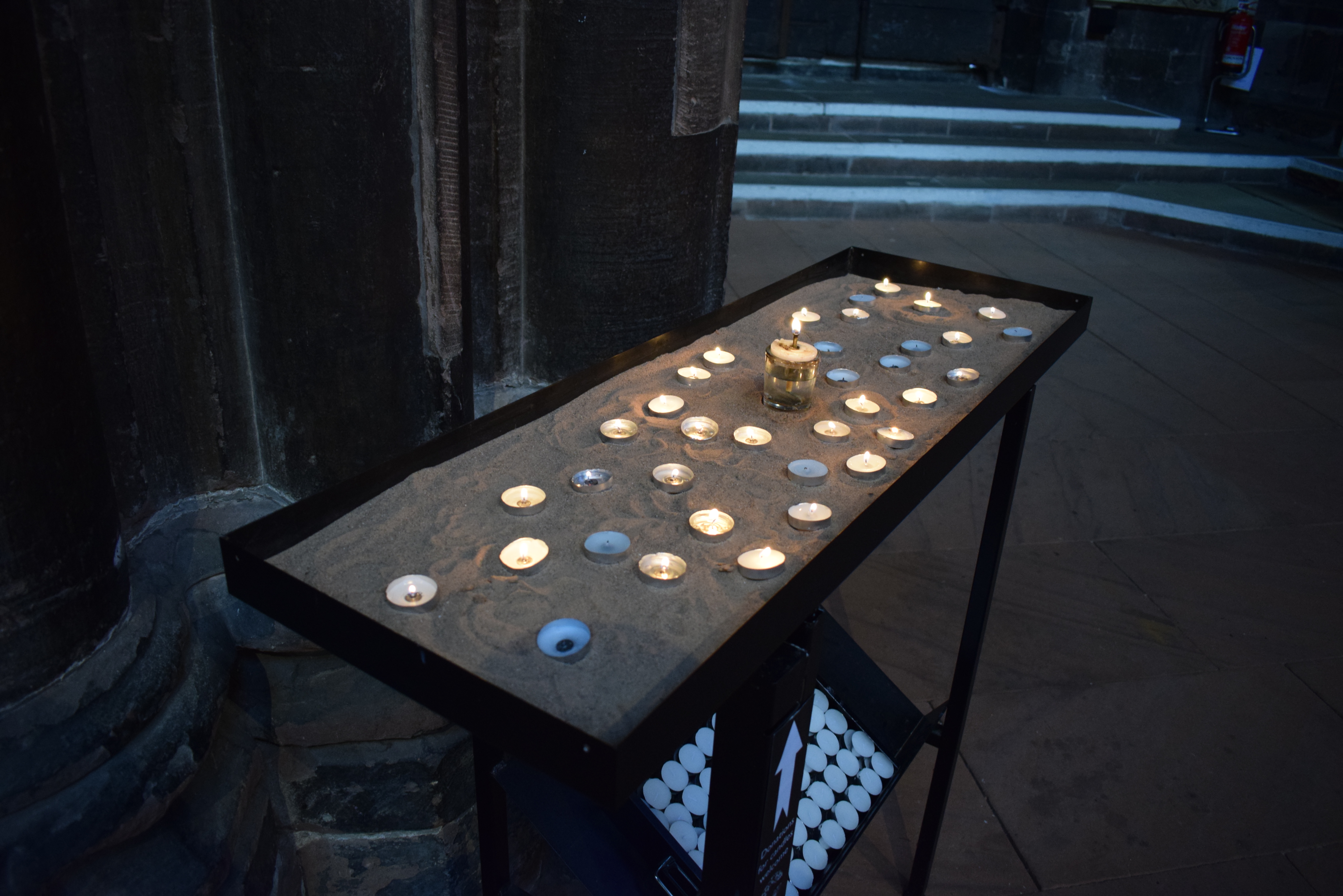
Stand next to them and close your eyes. In fact standing by the candles you may even feel their heat and experience a little of their light, even with your eyes tightly shut. Sometimes sensory experiences will force themselves onto you like that. Smells are often a key indicator of types of experience.
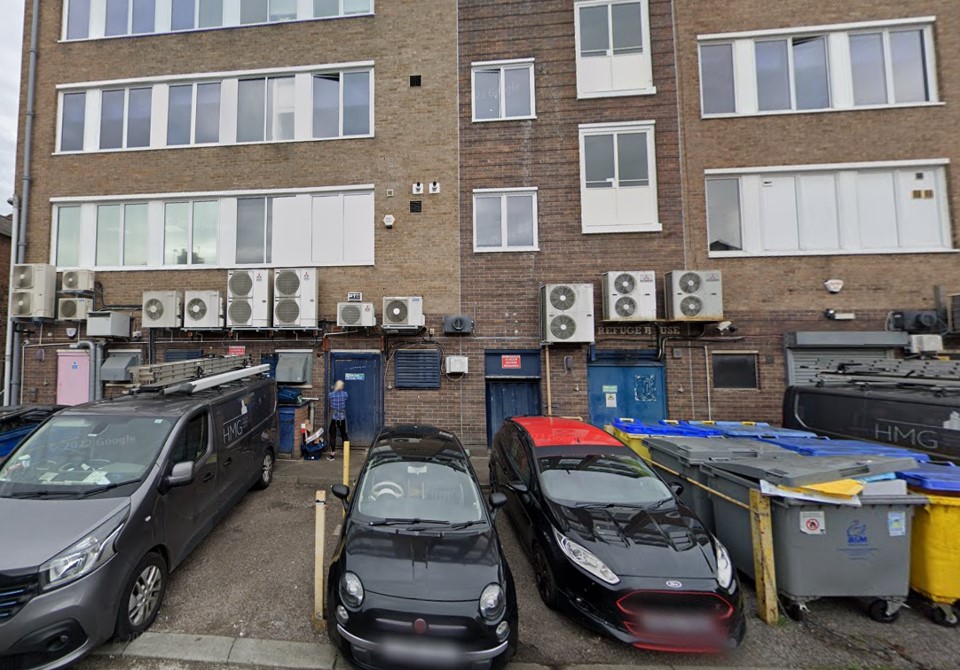
If you’ve worked in restaurants or bars, you will be familiar with the smells back of house and in the outdoor spaces to the rear, bins, kitchen extractor fans and the like. It never leaves you. There are bits of town where you can smell these smells and bits where you can’t and that tells us something, just from the smell, about who these different spaces are for, or who is and isn’t supposed to be in them.
The sensory heritage trail and guided walks at Chester Cathedral are an attempt to widen how we experience a historic building by constructing a series of experiences that encourage modes of investigation that go beyond the visual. I’m afraid we didn’t manage to fit in taste. But there are other senses too which we bring to the world daily and which might be of use to us as archaeologists. Balance, for instance, intuition, dread, that feeling you’ve forgotten something when you leave the house. All can potentially be of use in a more holistic sensory archaeology that aims to do more than just look.

The genesis for bringing this work on sensory heritage to Chester Heritage Festival was a long-running desire to create events specifically targeted at people with disabilities, including visual impairment. The trail at Chester Cathedral is a step in that direction and hopefully in future years we will be able to boast a range of fully-inclusive events on the Festival calendar. Increasing inclusivity is not just a case of opening the door and beckoning more people in. It also needs us to create new things that better suit the needs of others and by doing that, as I hope the Cathedral trail and this discussion is beginning to show, we can learn new things from how other people engage with the world in different ways to ourselves, massively strengthening both our own archaeologies and archaeology as a whole.
The second of the sensory archaeology spaces I want to touch on is objects themselves and whether they sense us as we sense them. The short answer is no, inanimate objects don’t see or feel us. But they do act independently of us and it’s important that we understand how. Material things have physical properties that are intrinsic to those objects, heaviness, mass, density and so on. And much of what things do is directed by interactions with other things, imagine a shovel leaning against a wall, or with forces, gravity being an obvious example. When we look at historic buildings we can see this too. They are made by people, yes, but one thing people are doing when they create a structure is using the properties of materials and the forces that act on them in such a way as to defy them, to spread loads, arrest gravitational pull, and unnaturally shape natural materials in such a way as to create semi-permanent spaces within those complex arrangements. One clear way to explain this, again in reference to buildings, is that we can see them as always in motion, always on the way to non-existence, from the first day of their construction. Most materials used in buildings naturally decay. Sometimes that decay can be sped up by contact between materials and other materials and substances, but essentially buildings are always decaying.
Occasional human interventions might impact the rate of decline. As well as ‘the five senses’ then, which may actually be more, we can bring to our engagements with the world a sense of motion, of existing not just now and then, but along a dynamic durational trajectory. While activities like the Cathedral sensory heritage trail help us understand differently through applying different human senses, we can also appreciate that the things that surround us are not just there to be looked at, or heard, or touched, but are also just there being things in their own thingy ways. So although objects do not sense the world in the way we sense the world, they do act independently within it in ways that we can both use to our advantage and be adversely affected by. What does that mean for our archaeology of the senses and the archaeologies that we can all do in our heads? It means that we have to appreciate that things are not just there to be subject to our interpretation.
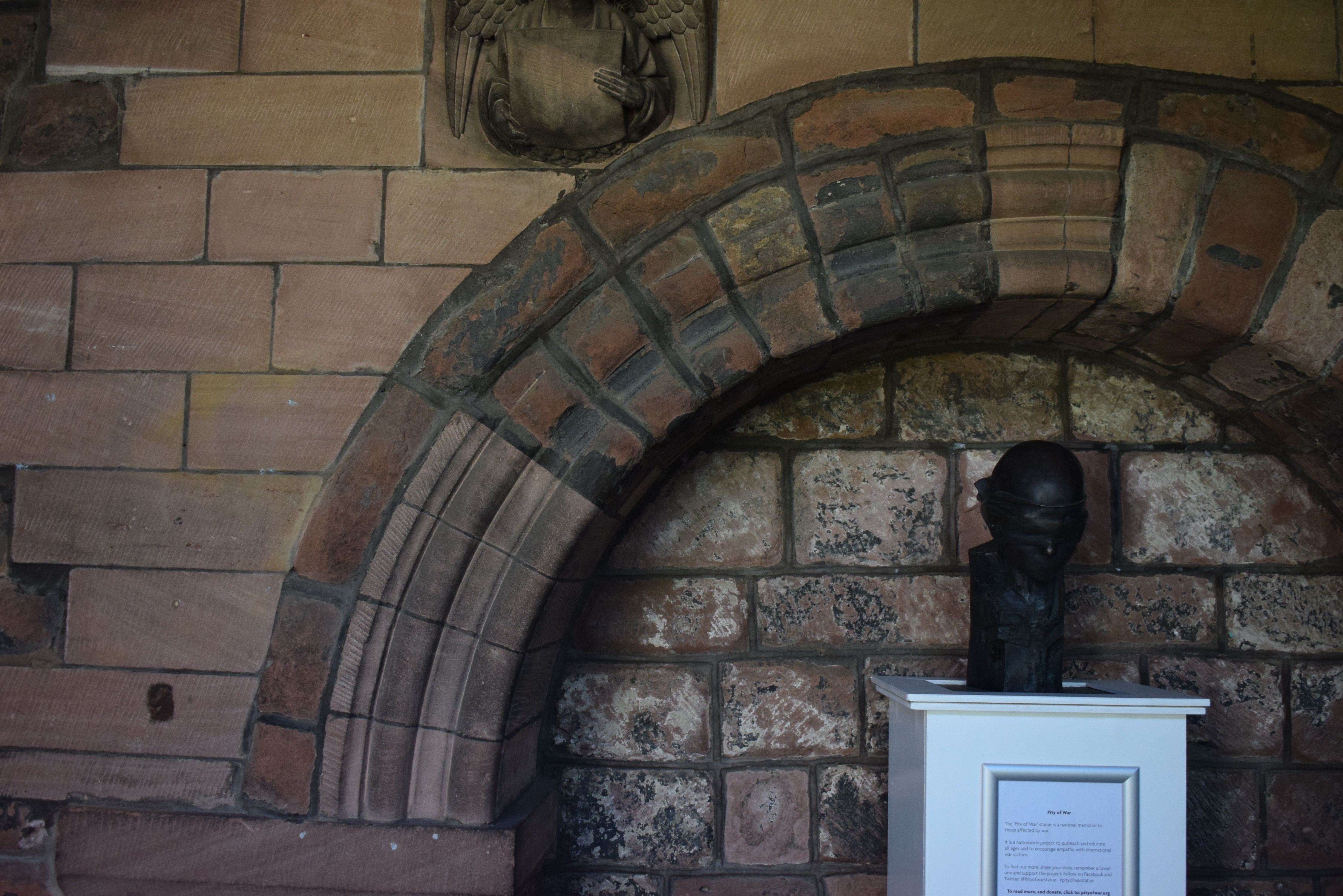
The life experiences of a medieval monk might require research, interpretation and communication to begin to understand, but the container of those life experiences is, on one level, utterly indifferent to both him and us. In a way it is a moral issue. When we give objects agency or recognise their agency and interactions with each other away from us as important, it makes it harder for us to simply impose ourselves on them. It might also humble us, making us feel small within a huge, complex, multi-dimensional world. The archaeology we can all do is not one of hierarchy and domination of the past via knowledge, it is one of compromise, cohabitation and respect.

The last space I want to talk about here is the one that exists in between us as people and those things being thingy out there in the world. It is here that we can start to appreciate that there might be an archaeological perspective on the existential question of what it is to be in the world. By extension, is this archaeology that we can all do in our heads a way not just of understanding things we encounter in deeper, more interesting ways, but something we can apply to our daily existence? What do we find in this in between space? Interaction with objects can lead to happiness, sadness, melancholy, angst, and a whole load of other emotions. Objects can provide companionship and comfort.
Maggie Nelson in Bluets, a book exploring depression and loss via an obsession with the colour blue, writes:
Loneliness is solitude with a problem. Can blue solve the problem, or can it at least keep me company within it? -No, not exactly. It cannot love me that way; it has no arms. But sometimes I do feel its presence to be a sort of wink – Here you are again, it says, and so am I.
We can probably all think of an object that provides for us the kind of comfort Nelson is describing here, something that just by existing changes how you feel a little. How is considering this useful for our archaeology? As I said, archaeology is about the relationship between people and things.
We can’t necessarily know for certain that an excavated object or a built space inspired comfort in someone, but we can easily suppose that it might have done, and in fact we can say that it probably did. We can’t know what individual people thought about individual things in the past, but we can know that they did think about them, that they lived lives mutually constituted with material worlds that went beyond functional relationships of creation, use and disposal. When we are doing those kinds of archaeology that relate to our own place in the contemporary world we do not need to be rigidly objective. When prompted to describe a thing or a place, it is totally legitimate to begin with how it makes you feel. And so, neatly, we see around us an archaeological world defined not by measurability, historical facts, recording, archiving, but by motion, emotion, variability and the vibrancy that come from affording everything the right to be defined in its own terms, which we can partially define by how they give rise to feelings in us and recognising the ways that the innate materiality of things contributes to that.
It’s not all good.
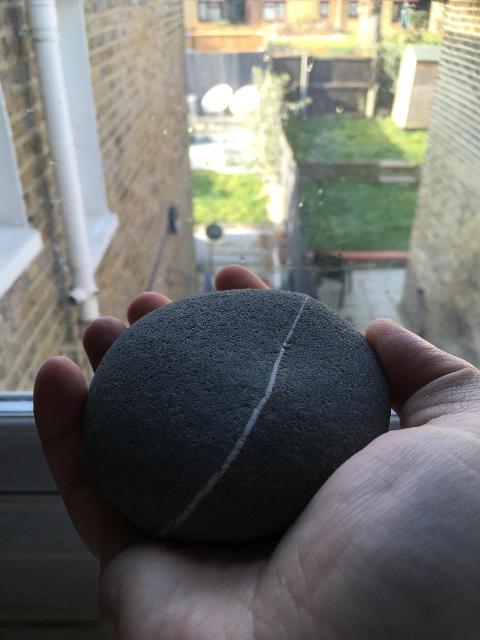
In Nausea, Sartre’s central character wants to throw a stone into the sea but on picking one up, dry on one side and wet on the other, he feels a sudden unpleasantness, a disgust, that makes him drop the stone and leave. Sartre writes:
Objects should not touch because they are not alive. You use them, put them back in place, you live among them: they are useful, nothing more. But they touch me, it is unbearable. I am afraid of being in contact with them as though they were living beasts. Now I see: I recall better what I felt the other day at the seashore when I held the pebble. It was a sort of sweetish sickness. How unpleasant it was! It came from the stone, I’m sure of it, it passed from the stone to my hand. Yes, that’s it, that’s just it—a sort of nausea in the hands.
What we come to understand as the story progresses is that this existential nausea arises from the stone’s impermeability, its independence, its total refusal to relinquish its defining physical qualities. The realisation that the character has is not that he is repulsed by a stone, but that the stone, in its essential stoniness, represents the whole unknowable world, indifferent to his existence. And in that encounter with indifference to his existence, perhaps it is understandable that he might feel that existence in a new and uncomfortable way.
We’ve put a bit of distance between ourselves and the Chester Heritage Festival sensory trail here, but it’s worth staying here for a moment before we return. By bringing a wider range of senses to all of our engagements with things, can we perhaps start to tell something about the whole world, even if what we learn is that it is infinitely complex and unknowable? If that’s a reality of our existence, then surely it’s worth us doing, unless we want archaeology to be an escape, which feels like a shame. But I want to stress that this is not a gloomy outlook. The infinite complexity and unknowability of the material world is part of its great majesty and it’s the context within which we do other things like learn facts about them, work out the construction sequence of a building, draw a building or object, or even follow a sensory trail around Chester cathedral. To approach the stuff of archaeology with an understanding that whatever you do, whatever knowledge of techniques you might bring to bear, there will always be a part of a thing that you can never even begin to understand… does that not establish a position of mutual respect between us and objects? I hope so.

My tours at the cathedral are done but using this talk and the sensory trail leaflet available at the cathedral, you can move around and follow our prompts to experience that space in a different way that you can hopefully develop the confidence to try elsewhere. Engaging with things using your full range of senses as a way to learn more about them is what archaeology is. Touch a wall and you’re doing it. Smell the candles and you’re doing it. Stand in the cloister garth with your eyes closed and the wind in your hair, listening to the cries of seagulls mingling with the vroom of motorbikes, footsteps passing somewhere behind you and someone on their mobile phone making a dinner reservation, perhaps even the distant strains of a cathedral organ, and you in the middle trying to make sense of what it all means. That, my friends, is archaeology.
 James Dixon Archaeology
3 replies on “Archaeology and the Senses”
This is really great! Thanks 😊
Can I share this with my students please? You describe what archaeology is about so beautifully. Thanks, Antonia
Of course! Thanks so much. J