Categories
Uncategorized

Archaeology, Heritage & Chester Contemporary

This paper was published in the Journal of Chester Archaeological Society vol 94

Introduction

Why is public art so important to archaeology and heritage? Permanent public artworks can be treated like any other remains of the past, telling us something about the context of their creation. As they also go on to exist through time after their creation and installation, the world may change around them in ways antithetical to the imagined future for which the artworks were intended, or even change in response to an artwork, sometimes in big ways like creating new destinations or driving tourist numbers, or more usually in small, almost imperceptible ways such as making people walk differently through a town, think differently about where they live, or prompting them to grumble on social media. Temporary public art and performance does the same thing, but in a slightly different way. People are still able to engage with artists’ interpretations of the places where they live, situated in those landscapes in ways that, intentionally or not, chime with or rub against how they feel and what they think they know. But then they are gone and they may or may not be missed. In contrast to most permanent installations, with temporary public art people experience the arrival of the piece and all that goes with that, and its loss. Whether temporary artworks are missed or not when they go, and the ways in which they live on in how people feel about and understand the places in which they live, says something about the interpretations that the artworks represented and how they are part of the present and future. Moreover, the temporariness of temporary artworks creates artistic intervention as an event, forcing people to think about all of this now. Complex networks of differing, sometimes competing, pasts, presents and futures are brought into focus, making people think about those works and networks in relation to their own world and lives, and understand a little more of their world in return.

Chester Contemporary

Chester Contemporary (22 September to 1 December 2023) was a visual arts event commissioned by Cheshire West and Chester Council (CWaC). It brought a number of international and local artists, established and emerging, together in the production of a ‘walking biennial’ curated by artist Ryan Gander OBE RA. Artists were invited to make and show work in Chester’s unique places and spaces, inspired by the theme ‘Centred on the Periphery’. Responses were broad and included installation, performance, voice and film works.

Chester Contemporary can be thought of as an important intervention in Chester’s heritage and archaeology for two reasons. The first, perhaps the most obvious, is that the content of works created for it tell people things about the city and its past, present and future, whether that is the geological formations on and in which the city sits or what it was like to grow up here at the end of the twentieth century. At a more fundamental level, though, it is also possible to learn something from how artists look at the city and consider how artistic practices and the outputs developed from those might usefully be added to the repertoire of approaches and activities available to archaeologists and heritage professionals. These lessons can be useful on a daily basis in moving around the city and observing it as individuals interested in history, heritage and archaeology, but also in projects like the CWaC Local List or Heritage Strategy, both of which can be enriched and reach wider and new audiences by both conceiving of archaeology and heritage as more widely, perhaps loosely, defined, and in encouraging others to do the same.

This short review will discuss a few of the Chester Contemporary artworks, how they can be thought of as a contribution to our knowledge and experience of the archaeology of the city, and how heritage practitioners can learn from them.

Chester Cathedral

Chester Cathedral hosted two performance works that addressed deep time and durational time in interesting ways. HORSETAILS by Elizabeth Price was a choral piece composed in response to the intersections of humans and geology at the point of extraction, the piece naming different stones and their locations in the geology of the area. The piece was performed and re-performed regularly in a number of different forms. Chester Cathedral was a perfect setting for the work, partly as an excellent backdrop for choral work in general, but also because audiences are surrounded by reformed geology in the form of the floors, walls and columns of the building. This is geology that has been extracted, crafted, shaped, sometimes into representations of humans, and assembled into architectural forms. It is also the site of new geology as past residents of Chester, buried beneath the cathedral’s floors, slowly return to the earth. That reformed geology is, of course, active, being pulled, pushed, stretched and compressed, and the performance of HORSETAILS reflected that, both in the duration of each performance and the regular repeating of performances throughout Chester Contemporary. For audiences, whether seeing it once or multiple times, the piece put geology-in-motion overtly into this great architectural space. All buildings are constantly in motion, but to have any space, let alone one as grand and important to the city as the cathedral, activated in this way was a great contribution to how we might understand the city and its structures. HORSETAILS served to remind us that most buildings have deep-time histories contained within their constituent parts and are in constant movement, even if that is largely unnoticeable to us at any particular point in time. The choral performance of HORSETAILS on the launch day of Chester Contemporary can be viewed on YouTube at https://www.youtube.com/watch?v=dAuin8o9hss.

It is perhaps also worth mentioning an earlier installation, Once A Desert by Heinrich & Palmer, a video, sound and light installation work shown at the cathedral in 2022. This work also spoke of the deep-time origins of the fabric of the cathedral and included an incredible wireframe scan of the building, with the viewpoint moving around the space and at one point shooting up the inside of one of the massive columns. In this shot the cathedral is experienced from the point of view of the physical forces holding the building together. A short excerpt of Once a Desert can be viewed on YouTube at https://www.youtube.com/watch?v=wK6LEzxq8WU.

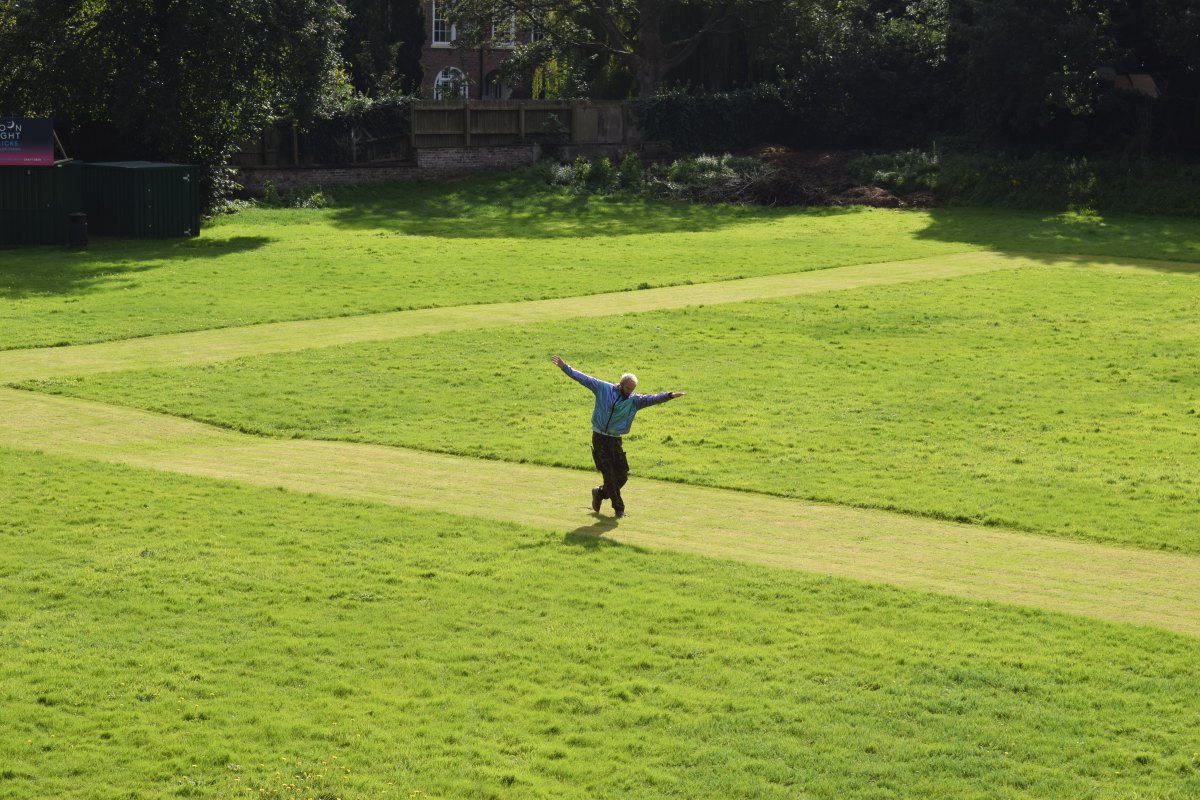
Also within the cathedral estate, on the Dean’s Field, was Crop by William Lang. Part of the Chester Contemporary Emerging Artists programme, the performance, structured with elements of improvisation, took place on and around a mown square representing the cathedral cloisters. The performance that took place condensed a day in the life of a medieval monk to just over twenty minutes, with elements showing waking, moving in and around the cloisters over the course of the day and finally retiring to the dormitory at the day’s end. A performance of Crop can be viewed on YouTube at https://www.youtube.com/watch?v=TiggsB3uDh8.

William Lang performing Crop, 23 September, 2023, viewed from the City Walls. Photo J Dixon

Two things stood out about this piece, both related to its relationship with its audience. The first was that, attending on the Chester Contemporary launch weekend, it was an incredible experience to be part of a large crowd standing together on the City Walls paying attention to something. Although most visitors to the walls, and local residents too, may occasionally pause to look at something or to take photos, engagement with the walls is usually in motion, so to make people stop and observe for a relatively long time offers a new way of engaging with heritage. Durational engagement is really important. People will always learn more about a place or space the longer they engage with it, and being still for a good amount of time is a very effective way to get to know a place or a building. The twenty or so minutes standing still on the wall by the Dean’s Field to observe a representation of a day in the life of a medieval monk combined two different durational experiences in an interesting way, slowing down experience of the city while speeding up a particular aspect of history. The effect was to unsettle more typical engagements with the past by letting people experience time passing. The result is heritage interpretation that people do not simply consume but of which they are part. Both on the day and subsequently, there have been comments on this piece on social media and made to the author directly from people who ‘had no idea what that was about’. Any response to art is fine, and this is a fairly typical response to contemporary performance from those who have not necessarily experienced work like it before, but it highlights both that occasionally more explicit prompting might be required to help an audience along in their understanding of the content of a piece and that, conversely, there is not always something to ‘get’, not a story that people are meant to follow and understand as in a play. So, while this piece took as its inspiration a day in the life of a medieval monk, the audience was not supposed to come away with a better understanding of that life but of the passage of time (the contrasting passages of time as discussed above), of the difference between their part in the event and the artist’s, and the experience of having stood still in a familiar place and watched an unfamiliar performance happen before them. The intricacies of movement, staging, the physicality of the performance might also be appreciated, all of which were not placed second to any story one was supposed to absorb and remember as they may be in other media. Ultimately, this was a fascinating piece and a type of artwork that could do a great deal to expand and change how we understand and experience the historic city.

Roodee

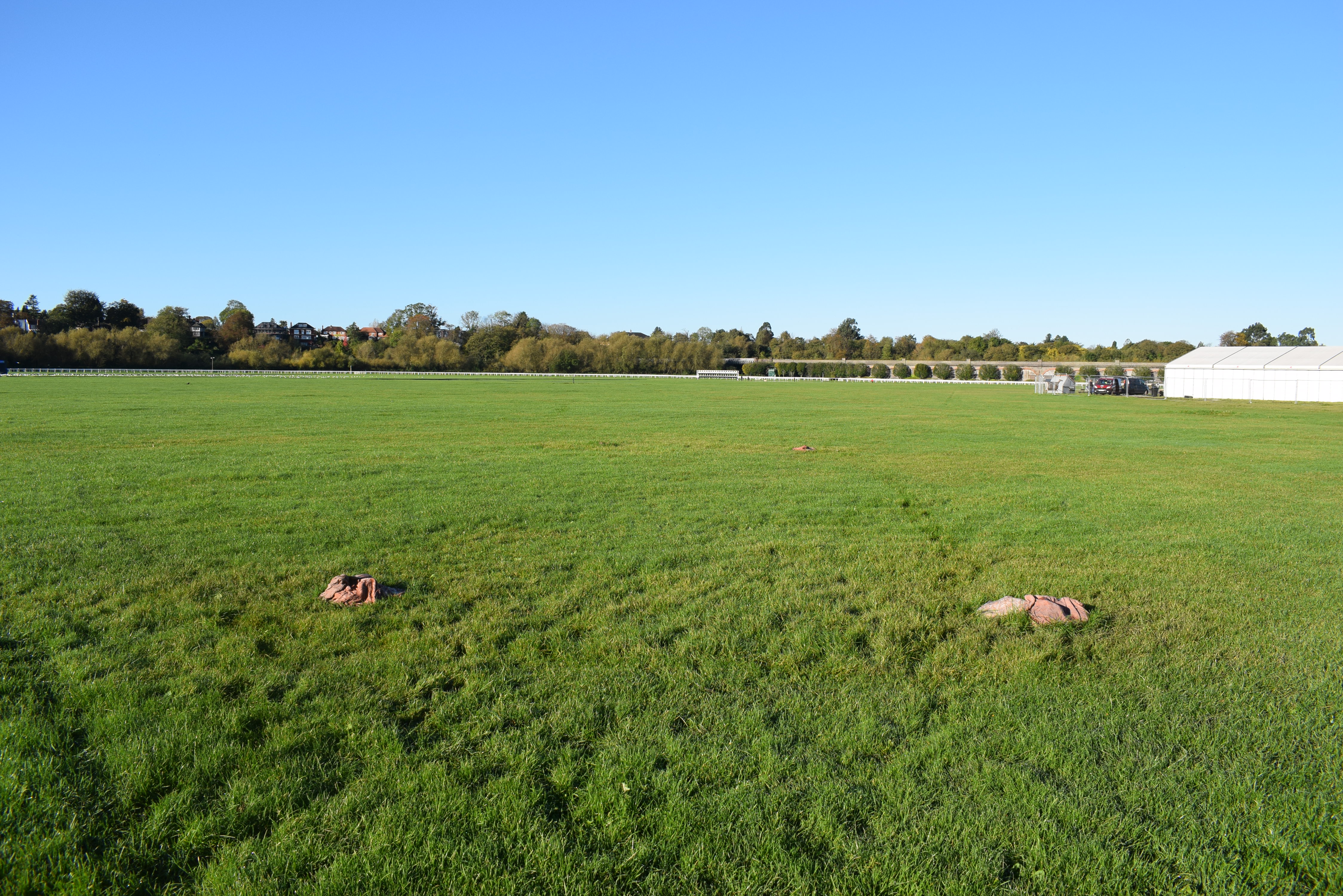
A Sweet Connection, Sorry Paul (Way After Goteddsday) by Nick Davies was located on the Roodee, inside the racetrack. The piece itself was formed of four ‘jumpers for goalposts’ made of casts of clothes and it referred to both the artist’s childhood and the historic football matches played on the Roodee on Shrove Tuesday.
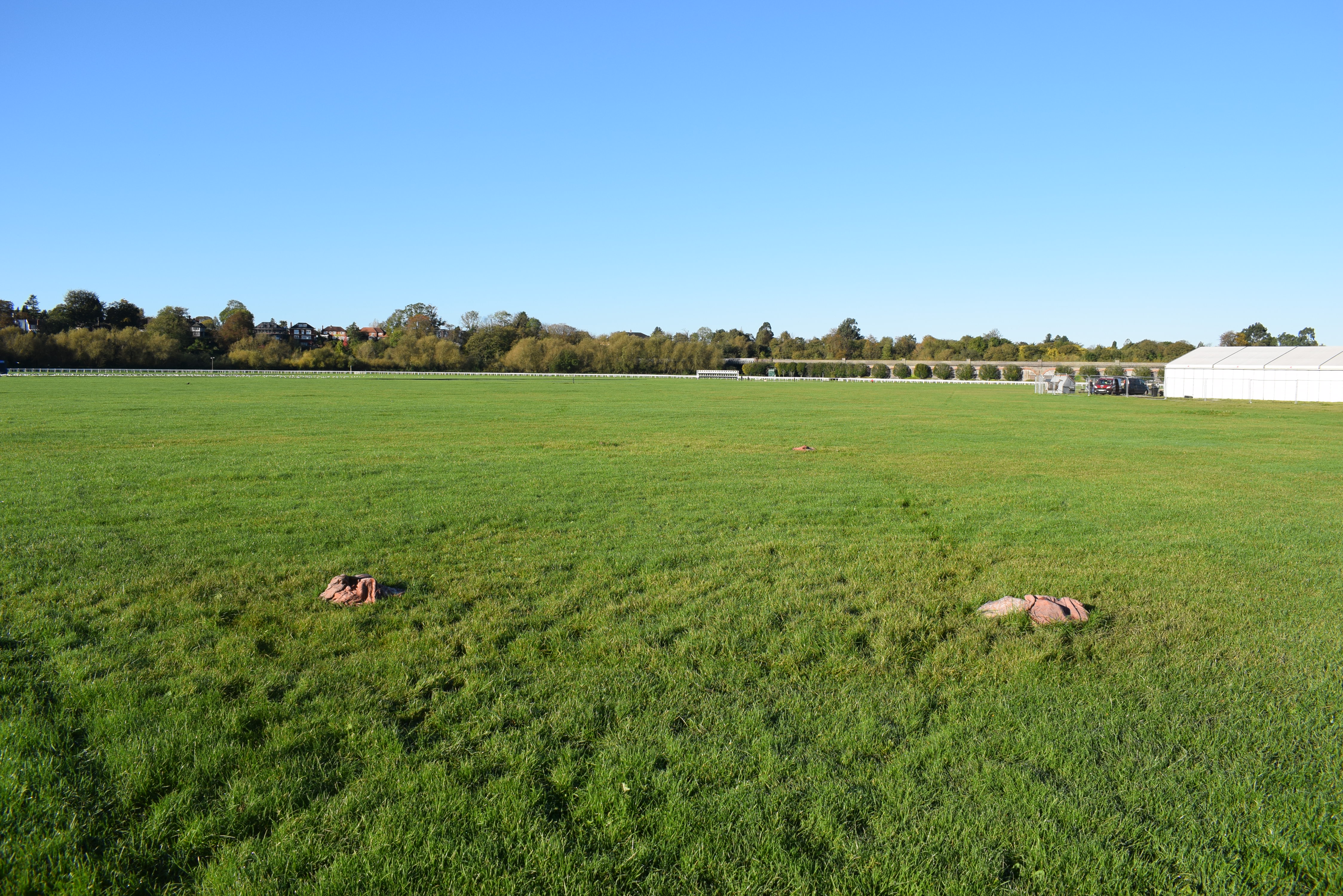
Nick Davies’ A Sweet Connection, Sorry Paul (Way After Goteddsday), Chester Racecourse. Photo J Dixon

This was, itself, a good piece of heritage interpretation, neatly placing present-day lives into the passage of longer periods of time, perhaps connecting forgotten historical traditions with how people remember, or do not remember, parts of their own lives. However, the work was something more than that when viewed in context in a way that could not perhaps have been foreseen by the artist. Because of heavy rain, towards the end of Chester Contemporary the Roodee was heavily waterlogged with large pools of water on its river side. Already this added a different dimension to the work, as another layer of history became visible. Not only was the work about the present day, the artist’s childhood and about the medieval city, but people could also see a hint of Roman and early medieval Chester in the same space as the former harbour started to reclaim the land. But, stepping back further, one could also observe that the temporary artwork and sodden Roodee were overlooked by formal heritage interpretation in the form of an information board and viewer on Nuns’ Road. The easy juxtaposition between formal and informal interpretation in one location, contrasting in form, but complementing each other’s content, made for a more rounded appreciation of the heritage of the location. However, it should be noted that the viewer is out of use, leaving the visitor to fill gaps in order to understand the site. Altogether this was a fascinating collection of different kinds of heritage interpretation that was enabled by the siting of Davies’ piece.

View over the Roodee showing formal heritage interpretation board with flooding in the background. Davies’ work sits in the centre ground, to the right of the Grade II* listed shaft of the Roodeye Cross. Photo J Dixon

The Nineties

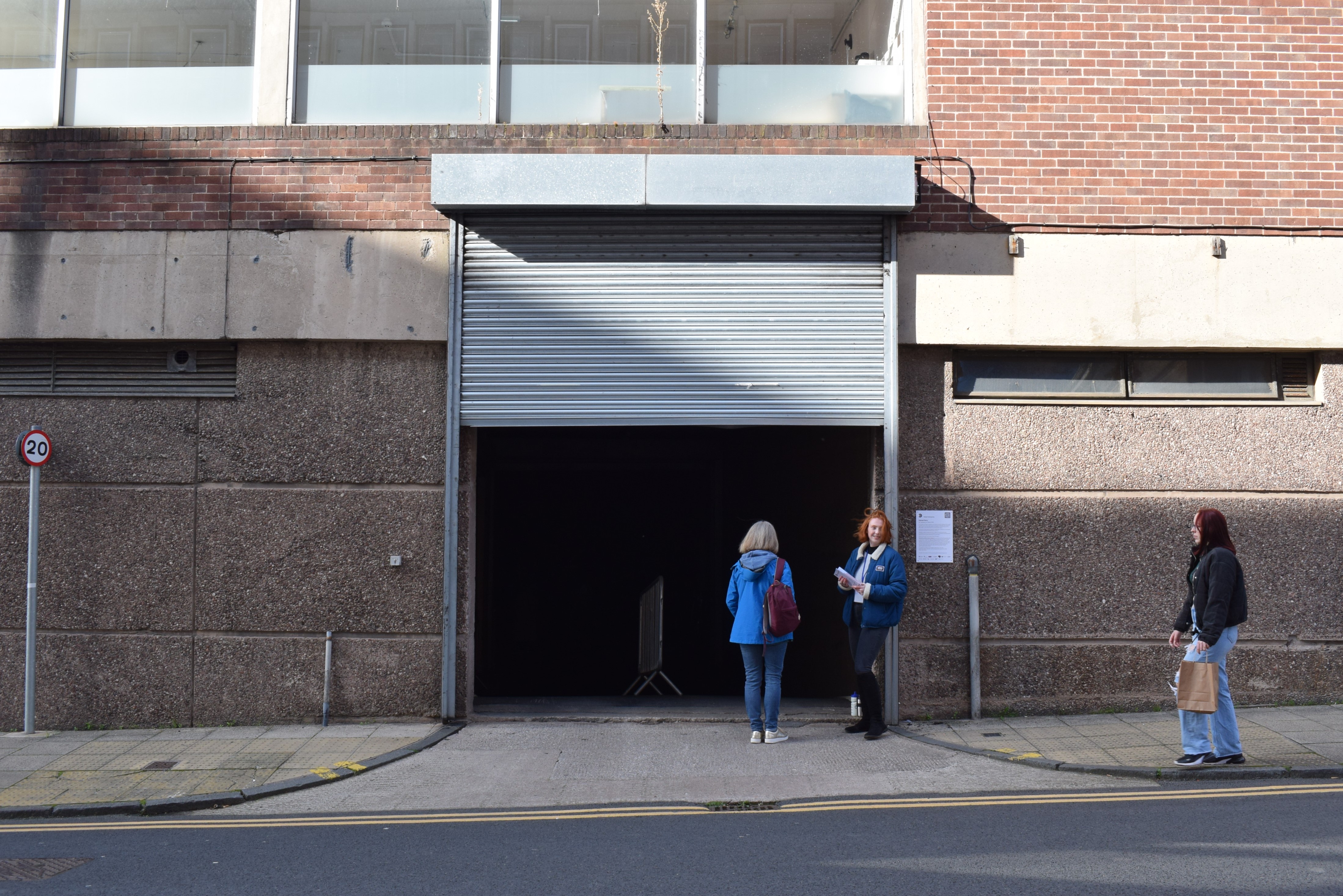
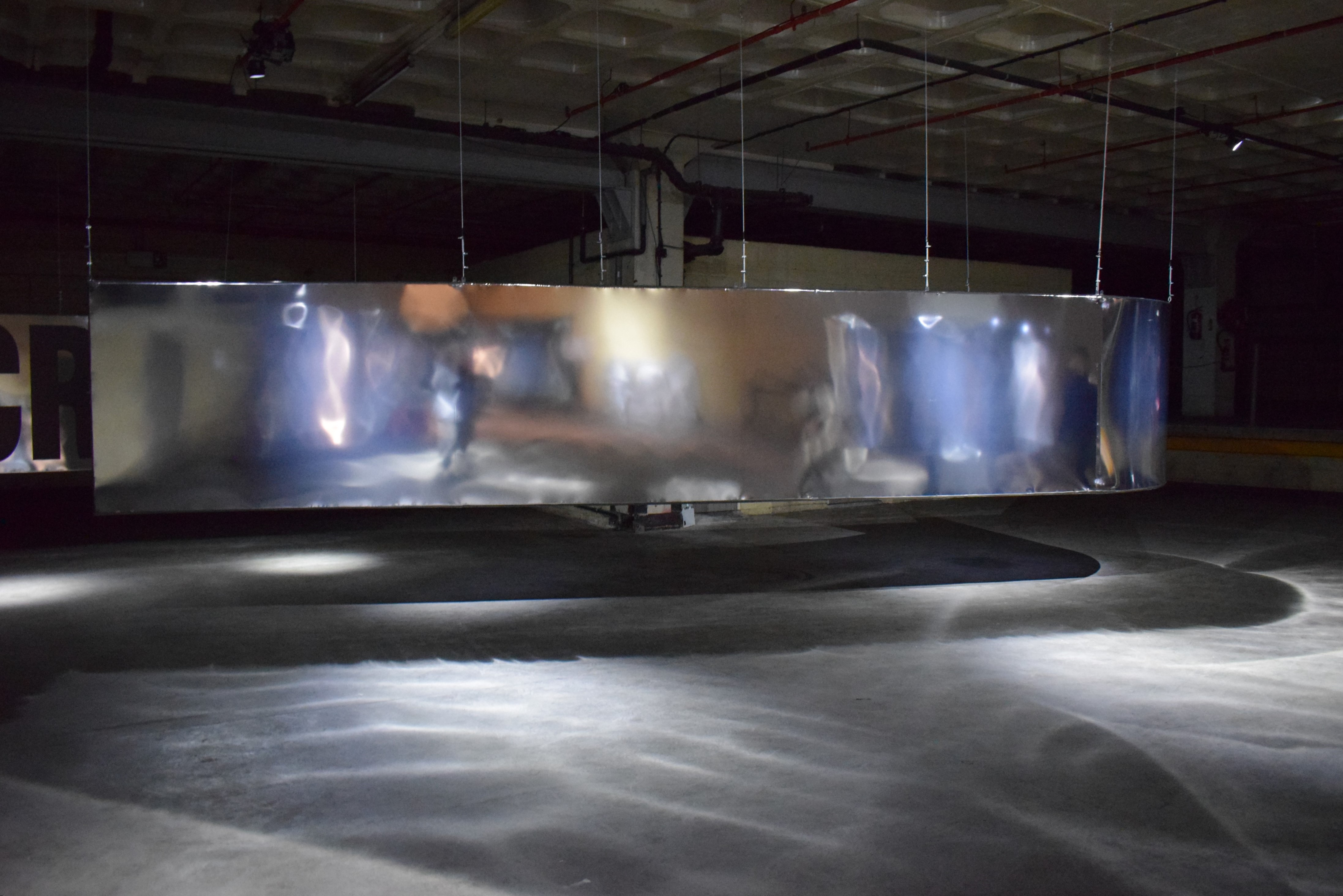
Works by Jacq Bebb and Hannah Perry were derived from experiences growing up in Chester in the 1990s, a period that might not ordinarily be thought of as falling under the remit of archaeology but which can be fruitfully investigated as well as any other period, with the added interest that most people remember it. Perry’s work No Tracksuits, No Trainers was installed in the old market depot off Hamilton Place and consisted of a number of metallic vinyl sheets hung in front of speakers on metal frames so that they vibrated when a soundtrack was played. The installation also included vacuum-formed car parts and clothing.

Part of No Tracksuits, No Trainers by Hannah Perry, former Chester Market depot. Photo J Dixon

No Tracksuits, No Trainers was a comment on being a working-class woman in the contemporary art world but took its inspiration from the door policy at nearby Rosie’s nightclub, the need to own the right clothes to be able to enter, the need to have a car to get anywhere in this part of the world, aspects of the culture surrounding cars and car modification, and the juxtaposition of car parts and the creativity of modification with Chester’s reputation as a heritage city. Viewed as heritage interpretation, Perry’s piece served to highlight aspects of life growing up in and around Chester that more comfortable or older residents, or residents who grew up elsewhere, might not be aware of. The focus on Rosie’s was particularly key as that nightclub a point of connection between Cestrians of a certain age, and many people under the age of thirty who visit Chester will have experience of Rosie’s as well. Thus it was possible to learn something about growing up in the area (and how its restrictions and barriers can be echoed later in life), but also to focus for a short time on a local place that is as important to some people as Browns, the old market or Owen Owen are to older reminiscers.

Also focusing on Chester clubs in the 1990s was Jacq Bebb’s sound installation Skulking The In-Betweens (Queer Time), a trio of recordings playing along the south side of Watergate Street at Row level. The spoken words making up the recordings were inspired by Bebb’s recollections of hanging around outside Connections, an LGBTQ+ nightclub on the street, being too young to go in but wanting to be part of the life that went on inside behind closed doors, and of what being able to go inside represented. Again, there was a focus on a forgotten part of Chester’s recent past as in Hannah Perry’s installation, but Bebb’s work looked at modes of investigation in a way that archaeologists and heritage practitioners can appreciate.

Bebb’s wider body of work often returns to the idea of ‘skulking’, going where the mood takes one, waiting around for something to happen, just being in spaces and places. This is a valuable form of archaeological investigation that all can easily try. Rather than relying on prior research, existing knowledge or guided tours, people can investigate places by simply being in them and waiting for things to draw their attention. There is an archaeological story to be told everywhere, and examining a particular space without preconceived notions of what it is or what one is looking for can take interpretation in interesting directions, where ‘the archaeology’ is more a collaboration between the viewer and the site than something he or she imposes on it as a knowledgeable interpreter or physically extracts as an excavator. Bebb’s focus on ‘skulking’, and their informal installation that could be heard in passing or by accident, also serves to democratise archaeology, removing hierarchies inherent in much of the discipline and its outputs. There are forms of useful and important archaeology that can be done by anyone at any time and Bebb’s skulking is a perfect example of that.

Simeon Barclay

The final piece discussed here is Them Over Road by Simeon Barclay, which consisted of three sets of three neon words in front of draped parachutes located in the window of Chester Roman Tours on Grosvenor Street, inside an empty unit on the Bridge Street Row west, and in the bottom of the car park of Crowne Plaza hotel, visible from St Michael’s Way. The words themselves present something of a challenge to the city; Bitter-Lost-Hero, Boys-Bruised-Aloof, Arrogant-Flacid-Pose.
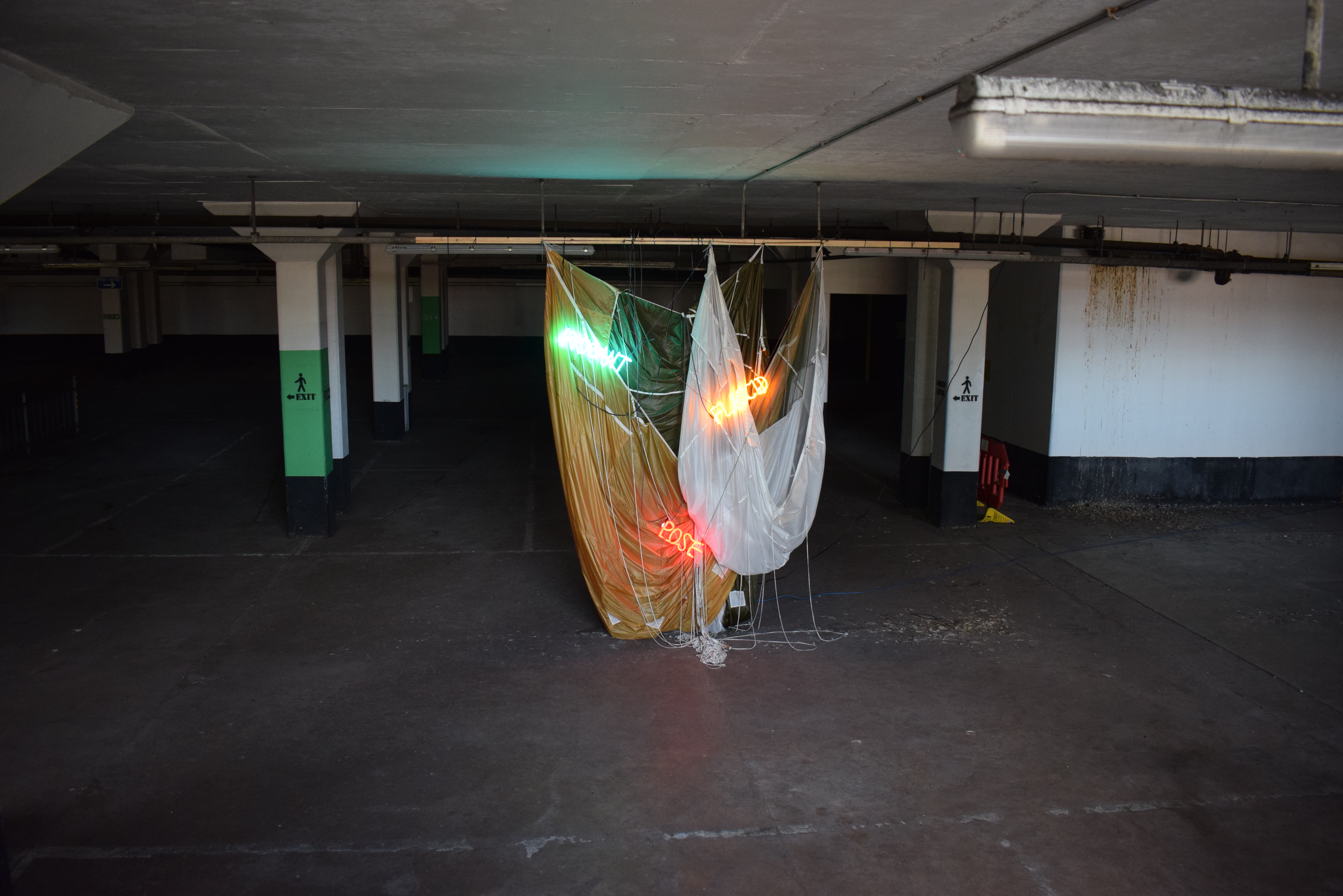
Part of Them Over Road by Simeon Barclay, Crowne Plaza Hotel car park. Photo J Dixon

These words are not the ones we might usually associate with Chester’s past or present and hint at a different story to be told. Barclay’s development of this work aimed to comment on the difference between the way Chester sees itself and the way it is seen, and the ways in which certain sites’ darker sides are written out of popular histories. The choices of Chester Roman Tours and the Rows, for instance, sought to highlight how we take certain aspects of our history for granted. The Rows, for instance, are not simply a benign heritage site in the present, but also a place where homeless people sleep and that has periods of trouble with anti-social behaviour. This is a side of The Rows that have been regularly reported on in local newspapers from their earliest editions but not one that is widely presented beyond Dark Heritage tours. Barclay’s point is that, even though we may seek to end those negative aspects of the Rows in the present and future, by ignoring those other presents and dark pasts we are ignoring a crucial aspect of the history of the Rows, which is that they are conducive to whatever has been deemed anti-social behaviour over at least the last two hundred years and possibly longer. Thus the Chester promoted through much heritage interpretation and marketing in the present day is at odds with crucial facts of its history. It is not to ignore the need to end anti-social behaviour in the present day to say that the Rows themselves enable bad behaviours through their intrinsic qualities of being central but separate, in places partially enclosed, a good vantage point and so on. Chester’s Roman history also has incredibly dark aspects that do not necessarily always make it into popular understanding of the period or the promotion of contemporary Chester as a Roman site. The City Walls, for instance, were intentionally reimagined as an attractive social space in the eighteenth century but were once a physical barrier separating different ethnic groups and political systems, one colonial-imperialist, the other more-or-less indigenous. The Crowne Plaza hotel car park has a more recent history, but is also at the centre of competing narratives, being dug out as part of an imagined future, but now little used.

With his multi-site work, Barclay used this historical commentary as a metaphor for the wider city and its view of itself, perhaps seeing an over-reliance on certain histories that are not the whole story and that have been sanitised. By extension, the work suggests that we need to recognise more of the complexities in Chester’s history and contemporary identity in order to have a strong future as something other than a tourist destination selling a particular view of the past. This was, perhaps, the Chester Contemporary artwork that spoke most directly to the complicated relationship between past and future manifested in the present.

Chester Contemporary and the Future

When Chester Contemporary was launched in 2022, curator Ryan Gander talked about wanting to create a new future for art in Chester. He spoke about there being nowhere for artists to meet each other and that artists who grow up here needed to move away to pursue their art. This is not just Gander’s vision. Chester Contemporary was itself part of a long-running effort by the Arts team of Cheshire West and Chester Council to transform the city’s art scene and strengthen its artistic community. The fact is that there are artists resident in Chester who say publicly that they work from Manchester because it has more kudos. Clearly, one thing that Chester Contemporary showed is not just that Chester can successfully host a walking biennial featuring internationally known artists as well as local talent, but that the works in something like Chester Contemporary can be of a key part of how we understand the city and its past. Chester Contemporary was an important archaeological event for precisely this reason. Not only did it occupy and change spaces we think that we know; it told new stories, told old stories in a different way, and afforded new ways of being in the city as archaeologists and heritage practitioners. Part of how Chester Contemporary changes the art scene in Chester can be how archaeologists and heritage practitioners engage with art and artists, how they take inspiration from the way artists engage with the historic environment and how they communicate with different publics. The future of art and archaeology/heritage in Chester can be seen as mutually dependent when it comes to innovation and developing new ways to look at the world and its pasts. As each develops and innovates, the other can respond. Ultimately, what Chester Contemporary demonstrates is that there are infinite possibilities when it comes to understanding and communicating history, archaeology and the historic environment, and hopefully this will become widely recognised and practiced as Chester’s contemporary art scene grows and is strengthened.

Acknowledgements

I should like to thank Simeon Barclay, Jacq Bebb, Hannah Perry, Nick Davies, Carmel Clapson and Emma Knight for discussions about artistic and archaeological practice, both during and since Chester Contemporary.

Chester Contemporary was funded by HM Government (UK Shared Prosperity Fund), Arts Council England, National Lottery Heritage Fund, Henry Moore Foundation, Historic England and National Lottery Heritage Fund. Project partners included University of Chester, Storyhouse, Open Eye Gallery and Edsential.
Categories
Uncategorized

Archaeology and the Senses

Adapted from a talk given as part of Chester Heritage Festival 2024

There are lots of ways to become an archaeologist. I’m sure you can think of one, perhaps several. But I want to give you another. Sit alone on a chair in an empty room in an empty house with your eyes closed. Concentrate your entire consciousness within your own body. Staying as still as possible, imagine a ball of energy buzzing at the very top of your head. Move that ball around your body, up and down each arm and leg, finishing with it in your chest. Now expand your awareness to the chair, its hardness, the points of contact between it and your body. Maybe send your ball of energy there. Staying as still as you can, now focus on the connection between your feet and the floor. Imagine the floor stretching out from you in every direction. You now have a very basic understanding of the relationship between your body and two things you are in contact with, the chair and the floor. Let’s go further. Again staying still, expand your consciousness to the walls of the room you are in, feel the distance between you and them, their texture, coldness. Now expand to the ceiling. Feel the difference between your consciousness being entirely within your body and, now, being in a box, enclosed on all sides. Populate the room with its furniture, some near, some far. Feel its proximity. Reach your consciousness out to different objects. Pause. Open your eyes. Stand up. Move around the room. Appreciate the difference between the room as it appeared within you and as it now appears, without. Be aware of your own body standing, moving, touching. You are becoming an archaeologist.
Archaeology is a lot of different things. It is a series of methods for understanding the past. It is the things we find underground when we excavate. It is the lifetime of changes seen in an old building. It is a complex world of practitioners and theorists, many of whom are keen to find new things for archaeologists to do and new ways for archaeologists to do them. There are kinds of archaeology that are incredibly specialist, that rely on access to particular pieces of equipment, and there are kinds of archaeology that we can all do in our heads. I want to talk about the latter. Because archaeology is ultimately all about the relationship between people and things. Most archaeology uses things to tell us about people in the past. But we can also work to differently understand things in the present. How you, as an individual, feel holding an object or standing in front of it, is an important kind of archaeology, one that can take us to a whole load of different places if we are happy to travel some less-trodden paths. For me, this democratises what can feel like a distant, specialist practice. It adds to those more specialised forms of archaeology that take years of training an archaeological sensibility that you can employ anytime you visit a historic site or walk around a town. To be honest, this is a kind of archaeology that will enrich your experience of sitting in your garden and for me that’s a great use of archaeology. It makes it for everyone and makes it useful in your daily life. That, to me, is very, very exciting.

Let’s address three spaces in which archaeology and the senses, or sensory archaeology, or archaeological sensitivity can change how we understand the world. I want to discuss how we can use our full range of senses to understand things. Then I want to talk about whether things have senses and autonomy, and lastly I want to talk about what happens between those two spaces, about our mutually-constitutive relationships with things and how we might use those to be differently in the world.

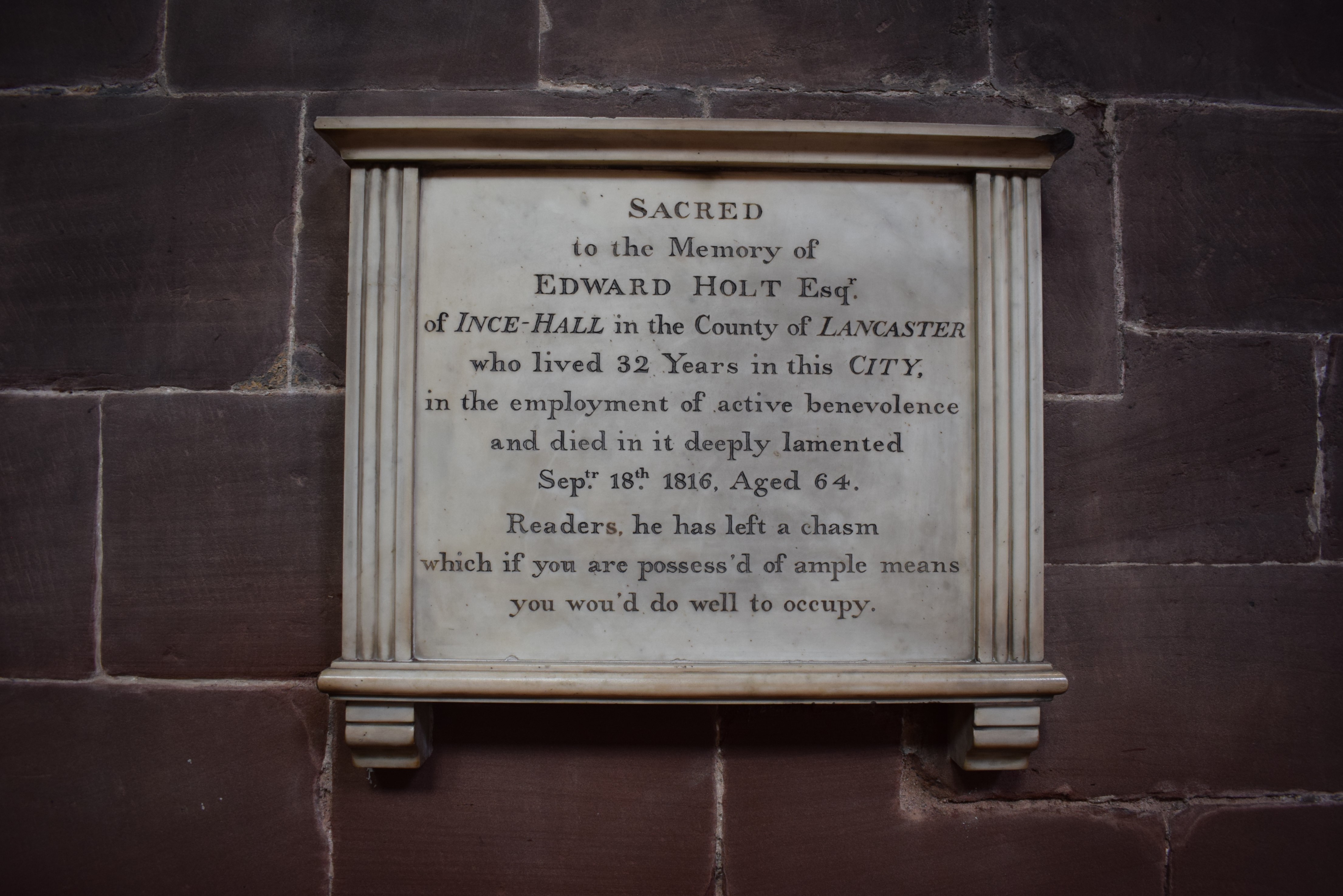
To discuss the first of these spaces, I want to refer to the sensory heritage trail running at Chester Cathedral as part of Chester Heritage Festival. I have been part of developing this activity and sensory heritage has been an interest of mine for a long time. My interest in this area has developed from a frustration about just how much we privilege the visual when we communicate about historic buildings (and by extension much archaeology and heritage). When you go to a historic building, you look at it! That’s normal. It’s very important that we do. But I feel we miss something when we do not routinely bring other senses to bear in our understanding. When we look at a building like Chester Cathedral, we see architecture, history, stratigraphy, memorials, maybe signage, both historic and modern.

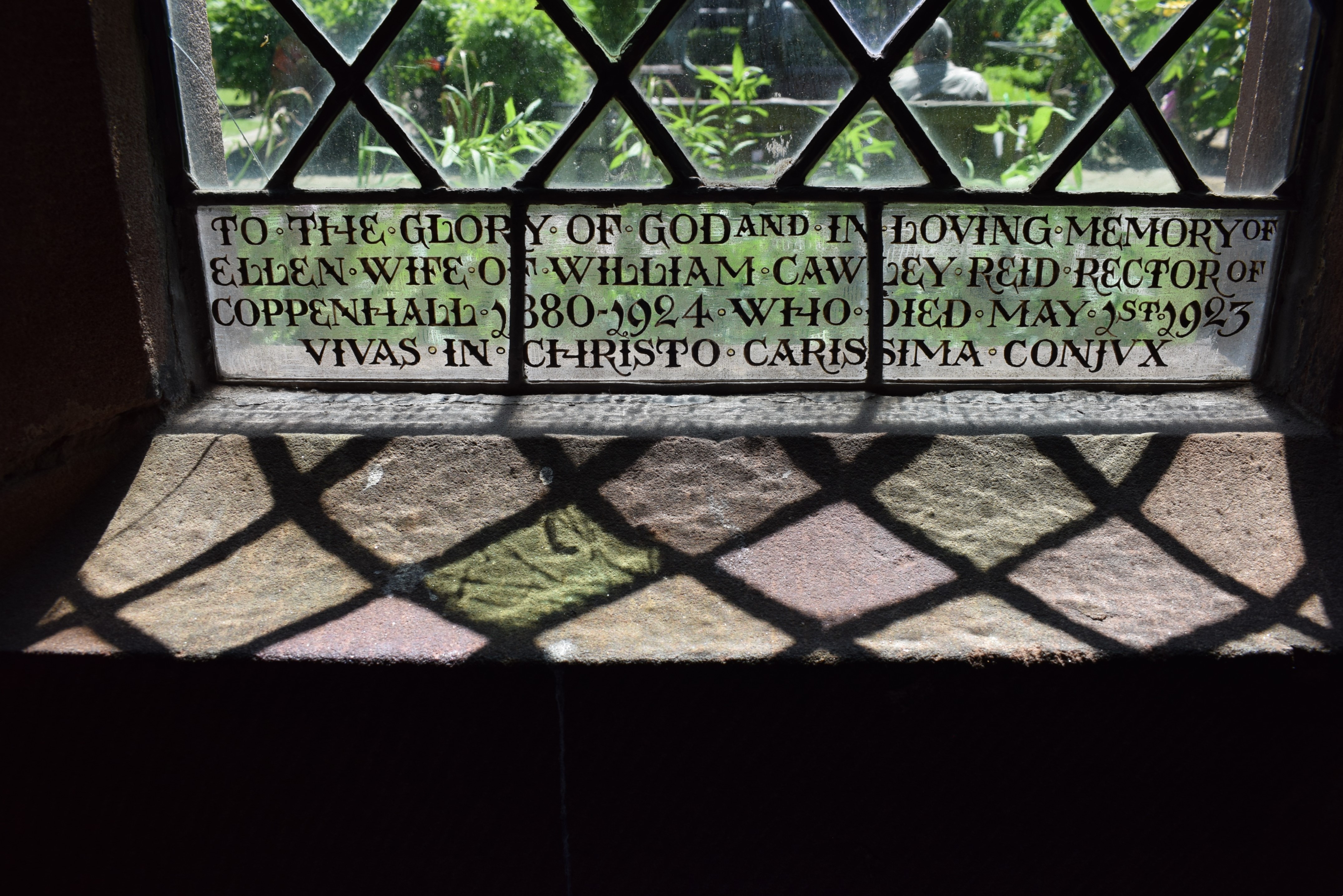
That’s fine. But we can’t begin to understand the experience of being in that space, today and then, via interpretive steps, in the past, using sight alone. Buildings archaeology is not architectural history. What the archaeology part brings to buildings is that our end point is not just understanding the building, though we do that along the way, but the lives of people inside it, and for that we need more than our eyes. The Cathedral’s sensory heritage trail consists of a series of locations where participants are encouraged to use non-visual senses to understand the space they are in, or to use sight in a different way. The latter makes use of the stained-glass windows around the cathedral cloister.

Here, rather than simply look at the windows in terms of content and artistry, participants are encouraged specifically to move around while looking and to see how the windows change as their relationship to light sources changes.

Different aspects of windows, and of anything, can be better appreciated in light or in dark, and sometimes being still to look at something isn’t the way to appreciate it at all. Kinetic views are those which are appreciated in motion and, of course, most of what we experience we experience in motion of some kind.

So, as well as standing looking at one window, for instance, we can walk along one whole stretch of cloister and experience a series of windows interspersed with stonework. The other aspect of the kinetic view that makes this a different kind of visual experience is that the usual experience of many things is within peripheral rather than central vision. As much as you should absolutely experience Chester Cathedral by going and looking at different bits of it for hours, you can also gain something by walking around it not focussing on anything in particular. Even within visual experiences then, the most common, we can gain something by looking in a different way, by widening the range of sensory experiences with which we seek to understand a building or place. Two of the stations on the Cathedral sensory trail focus on sound, asking participants to stop and listen, one inside the cathedral and the other in the cloister garth.

A focus on sound is an ideal opportunity to de-prioritise the visual very directly by closing your eyes and listening. Standing outside in the cloister garth with your eyes closed gives you the chance to concentrate on a whole soundscape. Some of the sounds are ones you might expect, others not. There will, of course, be sounds that might have been present in the Cathedral hundreds of years ago and others that are distinctly modern. One feature of sound is that it can travel a long way and it can be relatively easily restricted.

Outside in an unroofed space, you can hear the sounds of the garth itself, water, wind, footsteps, but also the sounds of Chester beyond. It’s a particularly interesting feature of the soundscape in a space like the garth that it includes components from such a wide range, when we might usually imagine it to be a quiet, introspective place. If I can just bring in an experience of another site, I did a workshop some years ago at a volunteer run cinema called The Cube Microplex in Bristol. It was a contemporary archaeology workshop and people taking part, who all worked there, were given different things to investigate in the space.

One pair, both musicians, were tasked to investigate the building’s sounds, but when I went to check up on them to see how they were getting on, they complained that they didn’t know what to do, that there were no sounds to investigate. I suggested that to get them started, they each just make a list of the sounds they could hear. Imagine their surprise when having done so they had completely different lists. So as well as listening, we should talk about what we can hear because we may have contrasting aural experiences of the same places and can quickly conclude that there must have been multiple sensory experiences of places in the past too.

Inside the cathedral, participants on the sensory heritage tours have had the opportunity to listen to live organ music. This is a typical part of the sound inside a cathedral, but here those listening will be encouraged to move around, to hear how the music sounds different in different locations, or in motion. We can contrast how organ music might fill the space with the ways in which it doesn’t, the acoustics of the Cathedral space.

Acoustic mapping is really interesting kind of buildings archaeology where sounds are recorded inside buildings from different locations and an acoustic signature developed. It is then possible to insert sounds into that digital map to hear how things might have sounded historically in the space, a really interesting and fun thing to do. Thinking about acoustics in even a basic way can add to how we understand the experience of being in a space.

Back in 2012, I went to an Ed Sheeran gig in Thetford Forest. It was perfectly fine. But one thing I noticed during the course of the evening was that in that huge open space with professional sound engineering, the music sounded best in the portable toilet block. Something about the way the sound reached then bounced around in that box created the perfect conditions for listening to Ed Sheeran. This is interesting archaeology, a non-visual examination of the space that tells us something about its physical details and the experience of being in it that could not have been gained in any other way than being there, listening, and contrasting sounds in different spaces. So to sight we add sound as we continue to use more senses to build archaeological understanding.

There is also, of course, touch. Digging archaeologists use touch all the time. When we trowel buried surfaces, sometimes the only way we can tell the difference between two different deposits is by a minute difference in feel between them, felt through the scraping of a trowel, that slightly higher percentage of clay or silt that marks out a deposit as a different historical event. Buildings are easy to touch, they are everywhere.

Walls, floors, columns, the sensations we get from touching buildings is a great addition to just looking at them. Sometimes touch is the only way to investigate as elements are intentionally hidden from view, for instance the stone columns in Durham Cathedral of which only the parts you can see are polished smooth. Stick your hand behind and its rough stone. Through touch we can also appreciate the difference between older and newer, original and replacement stone, or feel marks made on building materials. I’m also a big fan of feeling stone walls. Their graininess, coldness, sometimes their moistness, and the ways in which different blocks have eroded tells you something about the building but it also helps take that building back to the geological formations that were extracted and shaped to form the parts of which the building is made. Next time you are in a historic site where you’re not going to get in trouble for doing it, gently place your palm flat on a wall and see what you can feel. Move it around a little. Where does the feeling take you? You’re doing archaeology.

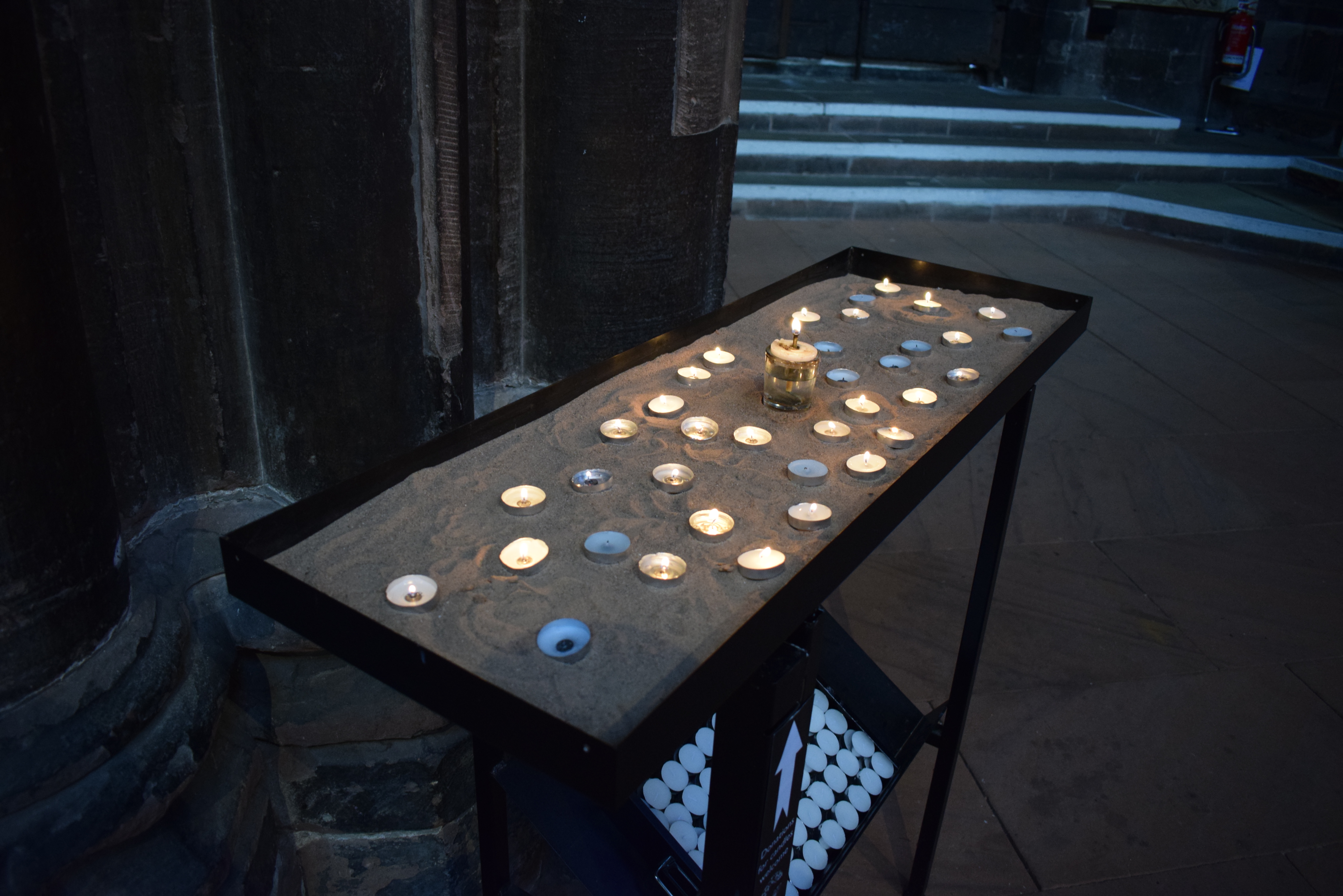
Smell is perhaps harder, though an important part of our experiences of place. On the sensory heritage tour, we have old books to smell, but for me the great cathedral smell is candles.

Stand next to them and close your eyes. In fact standing by the candles you may even feel their heat and experience a little of their light, even with your eyes tightly shut. Sometimes sensory experiences will force themselves onto you like that. Smells are often a key indicator of types of experience.

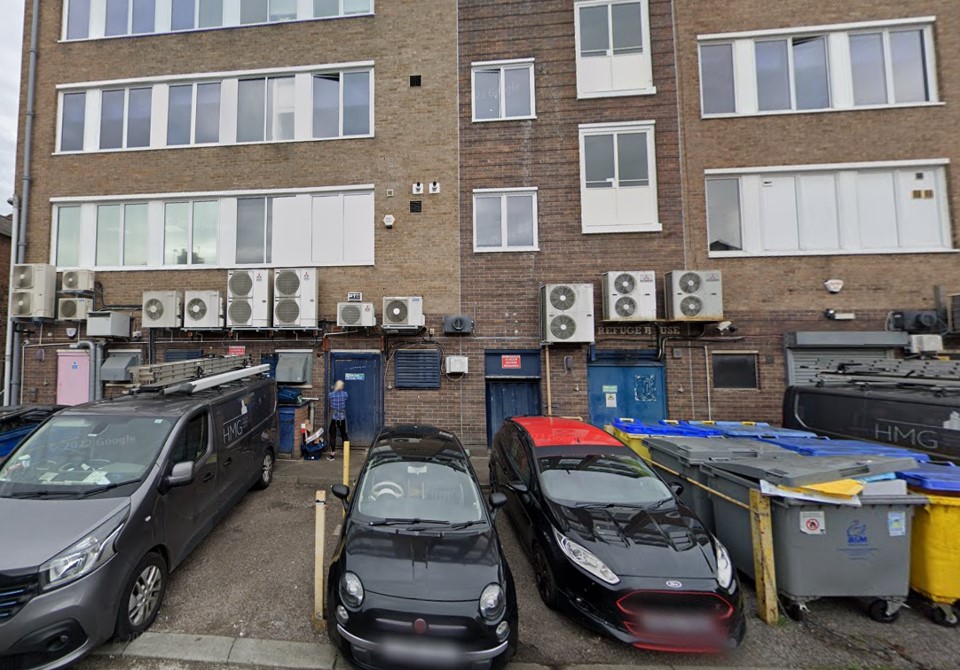
If you’ve worked in restaurants or bars, you will be familiar with the smells back of house and in the outdoor spaces to the rear, bins, kitchen extractor fans and the like. It never leaves you. There are bits of town where you can smell these smells and bits where you can’t and that tells us something, just from the smell, about who these different spaces are for, or who is and isn’t supposed to be in them.

The sensory heritage trail and guided walks at Chester Cathedral are an attempt to widen how we experience a historic building by constructing a series of experiences that encourage modes of investigation that go beyond the visual. I’m afraid we didn’t manage to fit in taste. But there are other senses too which we bring to the world daily and which might be of use to us as archaeologists. Balance, for instance, intuition, dread, that feeling you’ve forgotten something when you leave the house. All can potentially be of use in a more holistic sensory archaeology that aims to do more than just look.

The genesis for bringing this work on sensory heritage to Chester Heritage Festival was a long-running desire to create events specifically targeted at people with disabilities, including visual impairment. The trail at Chester Cathedral is a step in that direction and hopefully in future years we will be able to boast a range of fully-inclusive events on the Festival calendar. Increasing inclusivity is not just a case of opening the door and beckoning more people in. It also needs us to create new things that better suit the needs of others and by doing that, as I hope the Cathedral trail and this discussion is beginning to show, we can learn new things from how other people engage with the world in different ways to ourselves, massively strengthening both our own archaeologies and archaeology as a whole.

The second of the sensory archaeology spaces I want to touch on is objects themselves and whether they sense us as we sense them. The short answer is no, inanimate objects don’t see or feel us. But they do act independently of us and it’s important that we understand how. Material things have physical properties that are intrinsic to those objects, heaviness, mass, density and so on. And much of what things do is directed by interactions with other things, imagine a shovel leaning against a wall, or with forces, gravity being an obvious example. When we look at historic buildings we can see this too. They are made by people, yes, but one thing people are doing when they create a structure is using the properties of materials and the forces that act on them in such a way as to defy them, to spread loads, arrest gravitational pull, and unnaturally shape natural materials in such a way as to create semi-permanent spaces within those complex arrangements. One clear way to explain this, again in reference to buildings, is that we can see them as always in motion, always on the way to non-existence, from the first day of their construction. Most materials used in buildings naturally decay. Sometimes that decay can be sped up by contact between materials and other materials and substances, but essentially buildings are always decaying.

Occasional human interventions might impact the rate of decline. As well as ‘the five senses’ then, which may actually be more, we can bring to our engagements with the world a sense of motion, of existing not just now and then, but along a dynamic durational trajectory. While activities like the Cathedral sensory heritage trail help us understand differently through applying different human senses, we can also appreciate that the things that surround us are not just there to be looked at, or heard, or touched, but are also just there being things in their own thingy ways. So although objects do not sense the world in the way we sense the world, they do act independently within it in ways that we can both use to our advantage and be adversely affected by. What does that mean for our archaeology of the senses and the archaeologies that we can all do in our heads? It means that we have to appreciate that things are not just there to be subject to our interpretation.

The life experiences of a medieval monk might require research, interpretation and communication to begin to understand, but the container of those life experiences is, on one level, utterly indifferent to both him and us. In a way it is a moral issue. When we give objects agency or recognise their agency and interactions with each other away from us as important, it makes it harder for us to simply impose ourselves on them. It might also humble us, making us feel small within a huge, complex, multi-dimensional world. The archaeology we can all do is not one of hierarchy and domination of the past via knowledge, it is one of compromise, cohabitation and respect.

The last space I want to talk about here is the one that exists in between us as people and those things being thingy out there in the world. It is here that we can start to appreciate that there might be an archaeological perspective on the existential question of what it is to be in the world. By extension, is this archaeology that we can all do in our heads a way not just of understanding things we encounter in deeper, more interesting ways, but something we can apply to our daily existence? What do we find in this in between space? Interaction with objects can lead to happiness, sadness, melancholy, angst, and a whole load of other emotions. Objects can provide companionship and comfort.

Maggie Nelson in Bluets, a book exploring depression and loss via an obsession with the colour blue, writes:

Loneliness is solitude with a problem. Can blue solve the problem, or can it at least keep me company within it? -No, not exactly. It cannot love me that way; it has no arms. But sometimes I do feel its presence to be a sort of wink – Here you are again, it says, and so am I.

We can probably all think of an object that provides for us the kind of comfort Nelson is describing here, something that just by existing changes how you feel a little. How is considering this useful for our archaeology? As I said, archaeology is about the relationship between people and things.

We can’t necessarily know for certain that an excavated object or a built space inspired comfort in someone, but we can easily suppose that it might have done, and in fact we can say that it probably did. We can’t know what individual people thought about individual things in the past, but we can know that they did think about them, that they lived lives mutually constituted with material worlds that went beyond functional relationships of creation, use and disposal. When we are doing those kinds of archaeology that relate to our own place in the contemporary world we do not need to be rigidly objective. When prompted to describe a thing or a place, it is totally legitimate to begin with how it makes you feel. And so, neatly, we see around us an archaeological world defined not by measurability, historical facts, recording, archiving, but by motion, emotion, variability and the vibrancy that come from affording everything the right to be defined in its own terms, which we can partially define by how they give rise to feelings in us and recognising the ways that the innate materiality of things contributes to that.

It’s not all good.

In Nausea, Sartre’s central character wants to throw a stone into the sea but on picking one up, dry on one side and wet on the other, he feels a sudden unpleasantness, a disgust, that makes him drop the stone and leave. Sartre writes:

Objects should not touch because they are not alive. You use them, put them back in place, you live among them: they are useful, nothing more. But they touch me, it is unbearable. I am afraid of being in contact with them as though they were living beasts. Now I see: I recall better what I felt the other day at the seashore when I held the pebble. It was a sort of sweetish sickness. How unpleasant it was! It came from the stone, I’m sure of it, it passed from the stone to my hand. Yes, that’s it, that’s just it—a sort of nausea in the hands.

What we come to understand as the story progresses is that this existential nausea arises from the stone’s impermeability, its independence, its total refusal to relinquish its defining physical qualities. The realisation that the character has is not that he is repulsed by a stone, but that the stone, in its essential stoniness, represents the whole unknowable world, indifferent to his existence. And in that encounter with indifference to his existence, perhaps it is understandable that he might feel that existence in a new and uncomfortable way.

We’ve put a bit of distance between ourselves and the Chester Heritage Festival sensory trail here, but it’s worth staying here for a moment before we return. By bringing a wider range of senses to all of our engagements with things, can we perhaps start to tell something about the whole world, even if what we learn is that it is infinitely complex and unknowable? If that’s a reality of our existence, then surely it’s worth us doing, unless we want archaeology to be an escape, which feels like a shame. But I want to stress that this is not a gloomy outlook. The infinite complexity and unknowability of the material world is part of its great majesty and it’s the context within which we do other things like learn facts about them, work out the construction sequence of a building, draw a building or object, or even follow a sensory trail around Chester cathedral. To approach the stuff of archaeology with an understanding that whatever you do, whatever knowledge of techniques you might bring to bear, there will always be a part of a thing that you can never even begin to understand… does that not establish a position of mutual respect between us and objects? I hope so.

My tours at the cathedral are done but using this talk and the sensory trail leaflet available at the cathedral, you can move around and follow our prompts to experience that space in a different way that you can hopefully develop the confidence to try elsewhere. Engaging with things using your full range of senses as a way to learn more about them is what archaeology is. Touch a wall and you’re doing it. Smell the candles and you’re doing it. Stand in the cloister garth with your eyes closed and the wind in your hair, listening to the cries of seagulls mingling with the vroom of motorbikes, footsteps passing somewhere behind you and someone on their mobile phone making a dinner reservation, perhaps even the distant strains of a cathedral organ, and you in the middle trying to make sense of what it all means. That, my friends, is archaeology.

Categories
Art-Archaeology

The Archaeology of Chester Contemporary

Part of a talk given at the Grosvenor Museum, Chester, on 11 November 2023 as part of the Chester Contemporary events programme.

Introduction

As archaeologists, we move from the known to the unknown. We start with a thing and work to understand it for itself. Then we widen our gaze and add that thing to other things to try, eventually, to create new knowledge about complex past worlds. Archaeology, the way we understand both the things and the complex worlds, takes many forms. It is the trenches, the trowels, the measuring tapes, the theodolites, the laser scanners, the magnetometers, the isotope analysis, the papers, the journals, the conferences, the lectures, the books, and the television shows. But as well as those things that archaeologists make and use, archaeology is also in us. The difference between two soils, invisible to the eye, but felt and understood in our bodies, transmitted by the extension of the arm via a trowel, into an act of scraping. It’s there in the feelings and hunches, the choice to look one way and not another, the decision to communicate, how, when, and with whom. Those archaeologies that happen within us are all-important because, of course, not only does all archaeology happen today, in the moment, but all of the past and all of the future exist in the present too. So when we are doing those existential archaeologies of looking and feeling, what we are doing is simply being in proximity to all time, and trying, if we choose, to make sense of that, and maybe even do some good with it.

The works of Chester Contemporary are archaeology. They are archaeology in that they are things we can look at, feel, and attempt to understand. They are also, separately and together, a tool for us to understand Chester’s past and future; not facts about the past, not stories from the past, not specific hopes or predictions for the future, but how multiple pasts and futures exist all around us today. It’s vital that we take these chances to understand that because pasts and futures are neither fixed nor passive. They are fighting for attention, sometimes by themselves. Our knowledge of the past, for instance, is largely directed by those things that persisted, and refused to decay. So when I tell you that Chester Contemporary is one of the most important archaeological events in Chester’s history, you shouldn’t be surprised.

Chester Contemporary has complicated the way the past exists in contemporary Chester and artists and archaeologists all, we can gain a lot from putting ourselves into the middle of Chester Contemporary and the things and experiences it has created, and use that to understand what it is to be a person in this historic place. You may wish to use that understanding to simplify things. My preference, as it has always been through, now, multiple decades as an archaeologist, has been to use archaeological knowledge to try to come to terms with standing on the edge of an abyss containing all of the past, all of the present, all of the future; three things we can barely make out, let alone understand. Fleeting glimpses from the edge of everything is all we have.

Nature & Geology

Sometimes we need to pull back from the edge of that chaos and order things just a little, so I want to talk about some particular artworks and their archaeologies. By coincidence, they fit chronologically, from the ‘oldest’ (for the sake of brevity today, I will stick to linear time) to the youngest, but they also work as scales, from grand and worldly to minute and personal.

Harry Grundy, The Mingling Tree (2023). Photo by James Dixon.

So we will first stand and appreciate Harry Grundy’s The Mingling Tree, a potted olive tree travelling around the miniature railway in Grosvenor Park, in places brushing leaves with its soon-to-be neighbours. As with many of the Chester Contemporary works, there is a great beauty to this act. Trees are Chester’s oldest living inhabitants, some of them living a wild life of random seeding, pollinated by wind and insects. Most of the trees in Grosvenor Park came to be with notably less agency, but still, this is a place of nature in the city centre, dominated by the kinds of things that were here before Chester. To welcome a new tree, to introduce it to its fellows, to draw attention to it and its, we may say person-like, needs in this way, is a very beautiful thing to do. It reminds us that in and around the Chester of people, there is an equally complex Chester of non-people that know each other, live with and for each other, who have bonds that will be in place when everyone in this room is long gone. Grundy’s tree will outlive us all, and it will carry into the future the memories of having once been at the intersection of human and non-human worlds, of the brevity of a journey around the miniature railway, and scales of time in which people and their cities are but a moment.

Performance of HORSETAILS by Elizabeth Price, Chester Cathedral, 24 September 2023. Photo by James Dixon.

Elizabeth Price’s HORSETAILS takes on these temporal scales, taking as its subject geology and its meeting with humans at the point of mining and extraction. To date, this work has been performed in three forms with a full choral working still to come. Chester Cathedral is a perfect setting for the work because inside there, you are surrounded by geology, most of which has been extracted, shaped and reformed into arches, columns and walls, even representations of people, but some of which is undergoing a process of creation as people buried below the cathedral floors slowly return to the earth.

Performance of HORSETAILS by Elizabeth Price, Chester Cathedral, 5 November 2023. Photo by James Dixon.

We are surrounded there by the geology at the centre of Price’s work, but that geology is active, being pulled and pushed by physical forces, yet arranged in such a way as to largely deny them. Sitting listening to Horsetails took me back 18 months to being in the cathedral watching the film Once A Desert by Heinrich & Palmer, a film which also spoke to the deep time origins of the building materials surrounding us, in this case 200 million years back to the Triassic. Once A Desert made much use of a wireframe scan of the cathedral building and at one point we, the audience, are taken shooting up the inside of one of the cathedral’s columns. This is, obviously, not a real viewpoint, but it is a real place, inside geology, inside structure from the point of view of physics, soaring skywards to challenge gravity. Price’s own work takes us on a similar journey, speaking the names of places and stones, words and music bouncing off the very geology it references to help us experience the piece, and through the piece, the place.

Undercurrents

Layers, and the interfaces between layers, are incredibly important in archaeology and they feature strongly in Chester Contemporary too. Works by Simeon Barclay, James Lomax and Nick Davies speak to ‘what lies beneath’, to those temporal undercurrents which occasionally expose themselves to today.

James Lomax, Markets Shift Like Sand V (2023), Bridge St, Chester. Photo by James Dixon.

Lomax’s placing of striped tarpaulins brings memories of Chester’s historic markets into the present city, a space of uninterrupted commerce since the medieval period. The tarpaulins, ostensibly randomly placed do not just refer to that past, but remind us of the trajectory of that history. Closed shops may be distressing to the City and its people for months, years, but within a thousand year history, those shorter times are as nothing. Lomax’s tarpaulins tell us that things will be ok.

James Lomax, Markets Shift Like Sand V (2023), Eastgate St, Chester. Photo by James Dixon.

As we face uncertain futures, we, as people and as a city, are willed on by hundreds of thousands of traders across time, with whom we share our streets. Lomax’s Markets Shift Like Sand V has them peeping through windows, watching us as we walk, shop, hurry and worry.

Nick Davies, A Sweet Connection, Sorry Paul (Way After Gottetsday) (2023), Chester Racecourse. Photo by James Dixon.

Nick Davies work A Sweet Connection, Sorry Paul (Way After Gottetsday) references the artist’s own childhood, but is placed to also remind us of a forgotten piece of Chester’s history, the Shrove Tuesday football match that took place on the Roodee, though its referencing of a punch by the artist also brings to mind the so called ‘pitched battle’ fought here in 1441 between Rokley and Hooley, the gaolers of the Castle and the Northgate, the county and the city. A place of sport then, and a place of violence, and a place of violent sport. It is not only history that lies beneath, but other things too, violence being one of those undercurrents most likely to burst through to the surface.

But there are other dark undercurrents too and Simeon Barclay’s Them Over Road tackles them head on. Them Over Road is in three locations, in each of which neon words hang enmeshed with parachute fabric and cords. Those words are Bitter, Lost, Hero, Boys, Bruised, Aloof, Arrogant, Flacid, Pose.

Simeon Barclay, Them Over Road (2023), Crowne Plaza car park, Chester. Photo by James Dixon.

Of all of the Chester Contemporary works, Barclays is, to me, the darkest, the most menacing. In part, this is because of its locations, the basement car park, the empty shop, places where we have to work to find the piece and see it properly. But it’s also menacing because of the message of the work, that Chester’s focus on heritage is at odds with its aspirations and the ways in which a diverse range of people use and live in it, with which we may disagree. And that’s uncomfortable. It’s a view of Chester from the outside that isn’t really found across the rest of the Contemporary, but which, having found it, as archaeologists we cannot ignore.

Chester Contemporary, whether we see it as an archaeological section, a literary palimpsest or a geological melange, takes times other than now, past and future, and reveals to us how they exist in the present day, as legacy, memory, reference, hope and fear.

The 90s

Auto-archaeology is the archaeology of oneself, or explicitly of ourselves. I regularly walk through the streets of Chester listening on the Spotify app on my phone via wireless earphones, to the same music I bought in those streets on CD in the 1990s, and walked around listening to on my Discman. The archaeology of the 1990s is there in me every time I walk through town, but it’s also there in the works of Hannah Perry and Jacq Bebb, who both grew up walking through Chester at more or less the same time I did.

Entrance to Hannah Perry, No Tracksuit, No Trainers at The Old Chester Market Delivery Depot, Chester. Photo by James Dixon.

Perry’s No Tracksuit, No Trainers is a comment on being a working class woman in the contemporary art world, but it’s also a memory of growing up in Chester and having to meet the sartorial requirements of the bouncers outside Rosies. It’s also about the act of remembering.

Hannah Perry, No Tracksuit, No Trainers (2023). Photo by James Dixon.

Stand in front of one of Perry’s silver sheets and you will see a blurry reflection of yourself looking back. The soundscape begins with a low rumble, causing your reflection to pulse and shake, and as the vibration builds, you see yourself and your world transformed. To be here, there, today, on one day within a life, within a whole history of place, and to be confronted by the conflict between certainty and confusion, the latter exacerbated by Perry’s sensory experience, is to get to the heart of your own Chester, and of art as archaeology. No Tracksuit, No Trainers takes you out of time, and after seeing it for the first time, you emerge from that underground depot into a different Chester to the one you left. The nightclub experience Perry references is the one point in common I have with Cestrians anywhere in the world. When we meet, and speak, Rosies is where we begin. As archaeologists, we work from the known to the unknown. We stand at the door of a nightclub, with the countless others who have been and are still to come, and from it we understand our world.

Jacq Bebb in conversation with Jeremy Turner, Watergate Row South, Chester, 23 September 2023. Photo by James Dixon.

Jacq Bebb’s artistic practice, which they call ‘skulking the in-betweens’, parallels my archaeological practice of walking, looking and feeling, putting myself into places both known and unfamiliar, to see what stories they want me to communicate to others. Bebb’s Queer Time, a sound installation which takes as its inspiration 1990s memories of hanging around not getting into a nightclub on Watergate Street, changes your experience of that street. When we are going from shop to shop, from home to work, from a to b, or from the known to the unknown, the going doesn’t have to just be a means to an end. It has its own experiences, its own meanings, its own value. I first heard Bebb’s sound work with Jacq Bebb, having arranged to meet there. And the second, third, fourth times, I watched the clock and went intentionally to hear it. But then I heard it by accident, killing time in the city centre waiting for an event to start, I wandered along Watergate Street only to hear Queer Time playing up on the Row. I hadn’t expected it. I had, for that moment, forgotten it. And to have that aimless moment interrupted by Bebb’s work, their memories… well, I laughed out loud. Bebb’s work comes from skulking, and it’s best heard mid-skulk. It’s a reminder that you don’t have to get where you think you’re going to have a story to tell.

Conclusion

So… Chester Contemporary is archaeology and not only that, it’s a key part of how we understand Chester’s pasts as they exist today. The ways it does that are not, perhaps unique. We don’t need artworks to trigger memories, or describe our surroundings. We don’t need artworks to make us feel. We don’t need artworks to create juxtapositions, expose undercurrents, or question what we think we know. But artworks are great at doing those things because the way we experience those things in relation to artworks is usually unexpected. So we are not just dealing here with archaeology, we are dealing with great archaeology, archaeology that reaches inside us and rearranges our very being. It’s important too that all of this art-archaeology is happening at the same time. For the duration of Chester Contemporary, whether you experience it for two months or for a day, that feeling of delving, scraping, thinking new things and feeling things you didn’t expect to feel is made overt, and it’s not just you feeling these things as you notice something odd on your way to work, it’s all of us together noticing things at the same time. So it’s not just great archaeology, it’s great community archaeology too.

Crowd listening to Jacq Bebb, Watergate Row South, Chester, 23 September 2023. Photo by James Dixon.

We are not finished here today. There is more to be said. But when you leave here, I suggest you walk the Contemporary again, but think about the spaces between those artworks as well as the pieces themselves. Find other bits of Chester that tell the same stories as Jacq Bebb and Hannah Perry. Find other bits of Chester that unsettle you as much as Simeon Barclay. Find weird spaces and imagine what new things you would put in them. Then, you will be my kind of archaeologist, looking at your own worlds and your own lives in ways that might just astonish you.

Chester Contemporary is not just a thing that happened. It is contemporary Chester. We can all be contemporary archaeologists and as contemporary archaeologists we can take those knowns, our memories, favourite places, buildings and artworks, and work from them to an infinite unknown universe, all here in our little city. And that’s exciting.

Email jamesdixonresearch@yahoo.co.uk for more information.

Categories
Uncategorized

Chester Heritage Festival: Sensory Heritage

Next month, I’m going to be running some events as part of Chester Heritage Festival continuing my interest in approaches to built heritage that go beyond imparting historical and archaeological information to people and focussing instead on ‘practices of attention’.

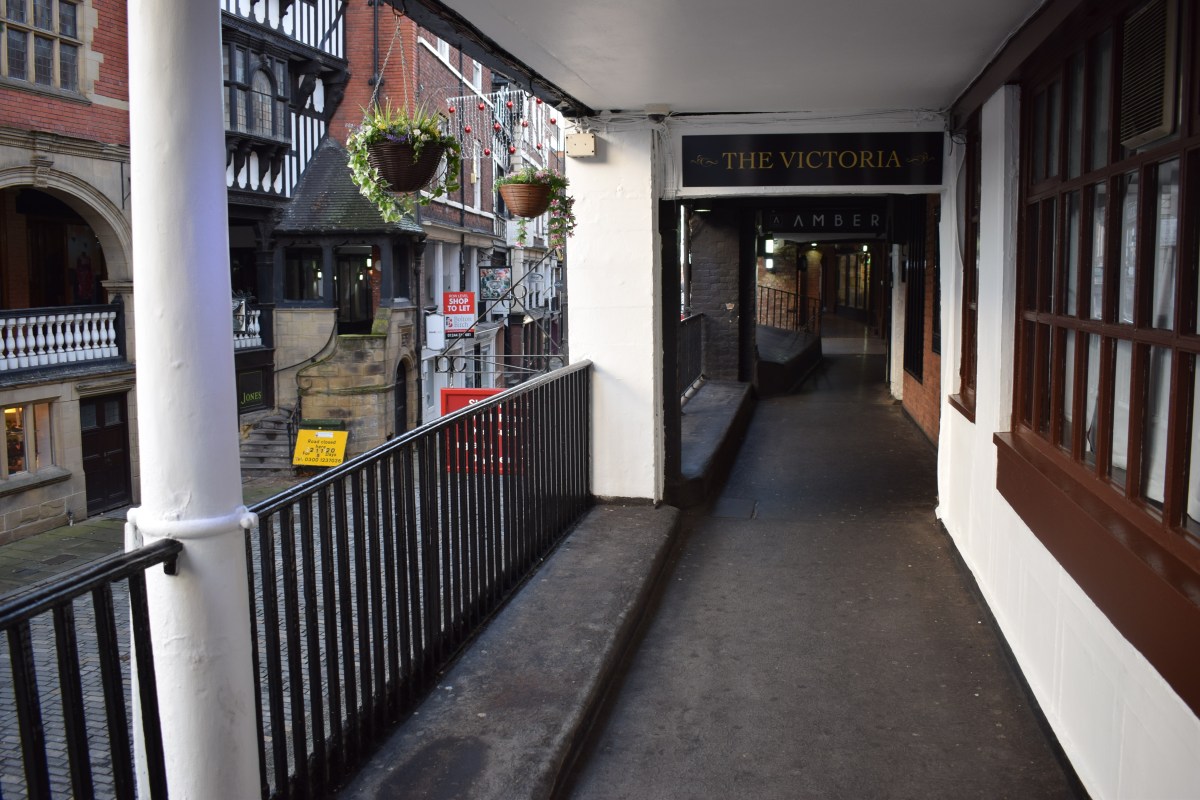
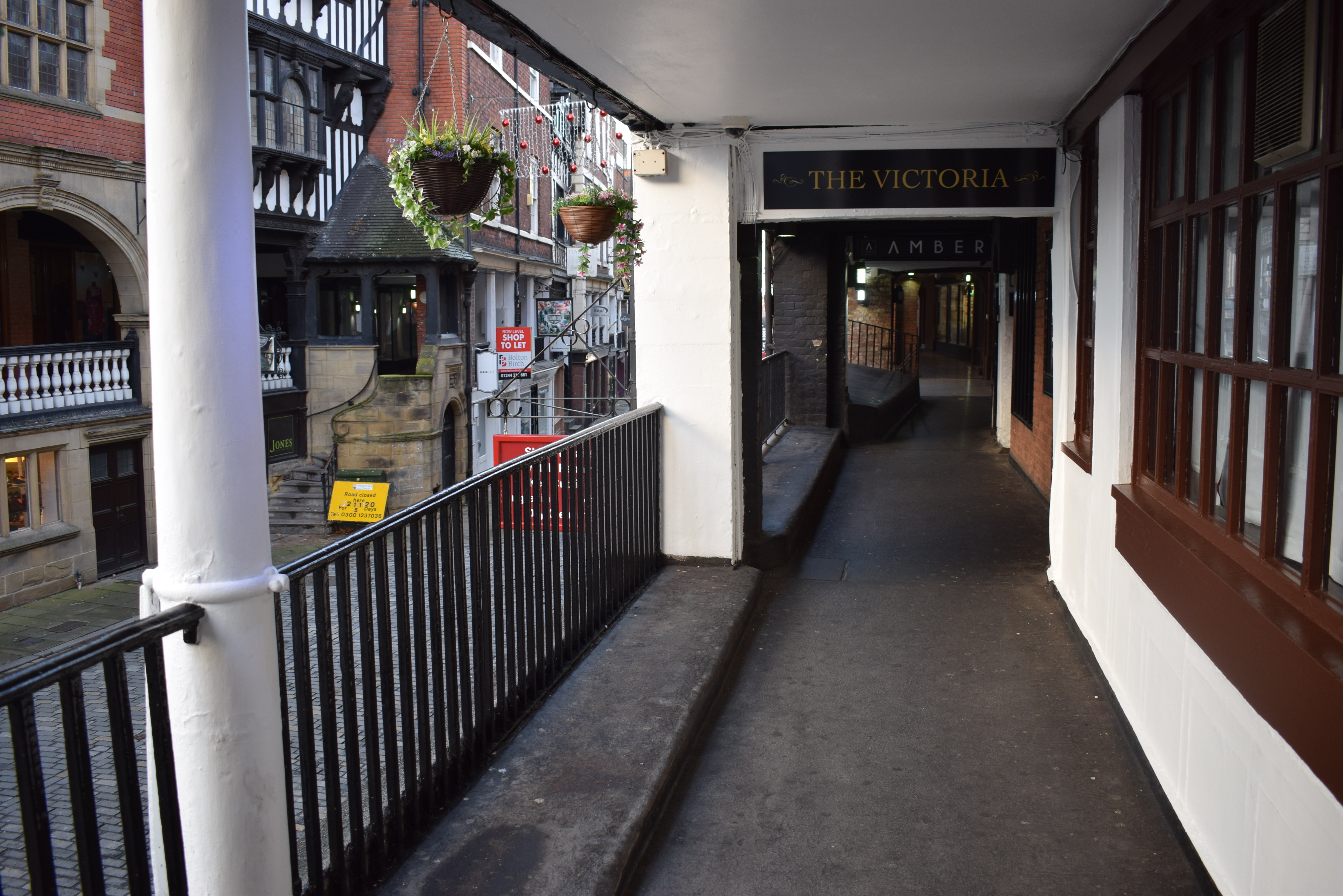
Watergate Row North, outside The Victoria pub

On Saturday 18 June, I’ll be leading ‘Silent Tours’ in and around the Chester Rows. When we wander around Chester Rows we hear a whole range of things at the same time, so much that it can be hard to pick out individual sounds. This event will create a different experience of Chester Rows.  As participants listen, I will only lead: up and down the Rows; in and out of buildings and businesses; and through spaces. Hopefully participants will leave with a new understanding of Chester’s historic Rows as a physical space and container of contemporary life. The event counters the problem of ‘too much information’ that only gives us certain understandings of the past, by simply paying attention to how the Rows are used today.

https://www.chesterheritagefestival.co.uk/event-details/sensory-heritage-silent-rows

On Thursday 23rd and Saturday 25th, I’ll be helping people explore a building through touch at St Mary-on-the-Hill near the castle.

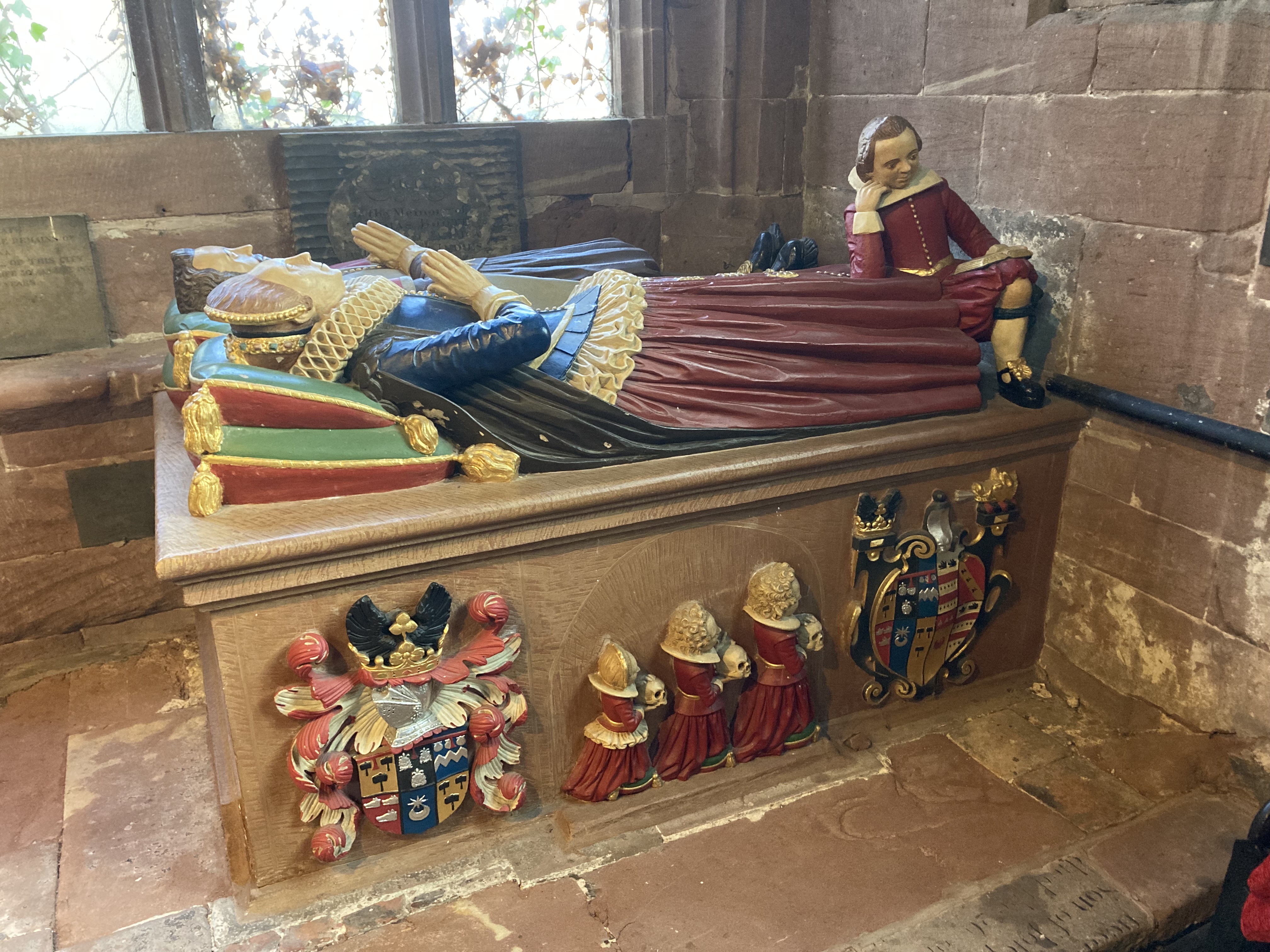
The Gamul tomb in St Mary-on-the-Hill Church, Chester

How we understand historic buildings usually revolves around the visual, typically drawings and printed words, and, of course, the buildings themselves. But buildings are physical things in the landscape, and they typically create spaces that are felt and experienced. This event will allow people to experience a historic building in a different way, directly through touch. Visitors will have the opportunity to feel the building’s walls, columns, furniture, and monuments; and to appreciate the range of material and textures that tells us about what the building is and how it has developed over time.

https://www.chesterheritagefestival.co.uk/event-details/sensory-heritage-touch-2022-06-23-13-00

Booking opens at the end of May! See you there!

Categories
Uncategorized

Art-archaeology co-author wanted!

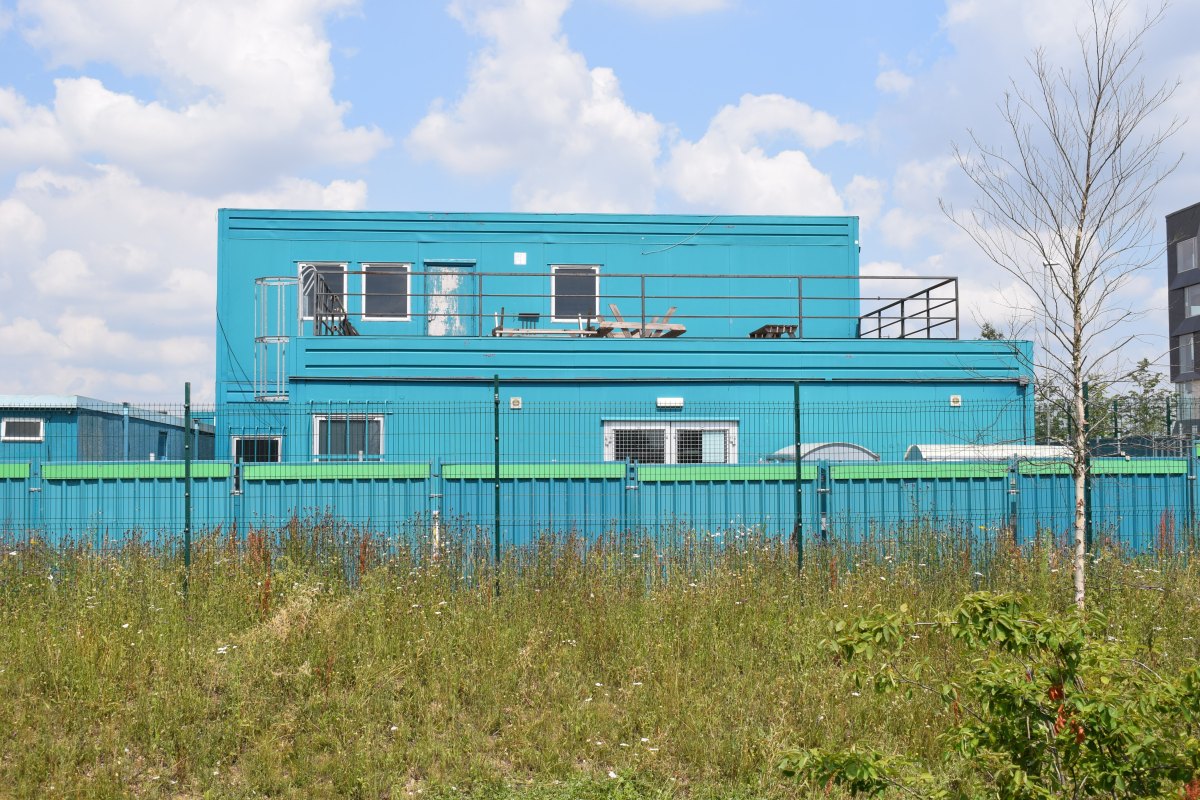
For the last seven years, I’ve been part of a project called Prospection (read more here) that has been investigating the construction of the new Eddington community on the edge of Cambridge.

My work has focussed on ‘visual archaeology’ and how we might use photographs, plus contemporary archaeology, to tell the stories of a developing place. The work was originally strongly inspired by engagements with Japanese art-archaeology projects and has continued over four annual visits to Eddington.

I’ve reached a point where I want to write something about my work for Prospection but I don’t just want to recap what I’ve been doing, plus I don’t have any need for single-authored academic papers or anything like that. So I thought I’d see if there’s anyone out there who fancies collaborating on some writing arising from my Eddington work.

Here’s the first document I produced for this part of the project:

And here’s the second:

There’s also two more years of ‘reports’, an archive of around 500 photos, plus one sort of artwork (an archwork really) and two other years of other responses to the site that didn’t really go anywhere.

So, I’d love to hear from someone who’s interested in helping me make sense of it all!

You can reply here, or find me at @james__dixon on Twitter or jamesdixonresearch (at) yahoo.co.uk

Categories
Uncategorized

Cultural Heritage and the Future with @Sarah_May1

At 1pm BST on Tuesday 4 May, Sarah May (@Sarah_May1) and me will be discussing our contributions to the recent Cultural Heritage and the Future volume edited by Cornelius Holtorf and Anders Högberg. My chapter, The Spectre of Non-Completion, looks at how thinking about half-built buildings can bring the future into how we understand changing contemporary landscapes. Sarah wrote about the role of children in heritage discourse as placeholders for the future, in a chapter titled Heritage, Thrift and Our Children’s Children.

We’d love for you to join us to hear more about and discuss this research, so please DM Sarah for a Zoom link, and either/both of us for pdfs of our chapters.

Categories
Uncategorized

Investigating Chester: Walking the Roman Landscape, 30 August 2020

When I asked people for ideas to help explore Chester, Sarah May @Sarah_May1 mentioned walking and Romans… after a bit of thinking, I decided to put together a walk covering key parts of Chester’s Roman landscape. You can see my route here.

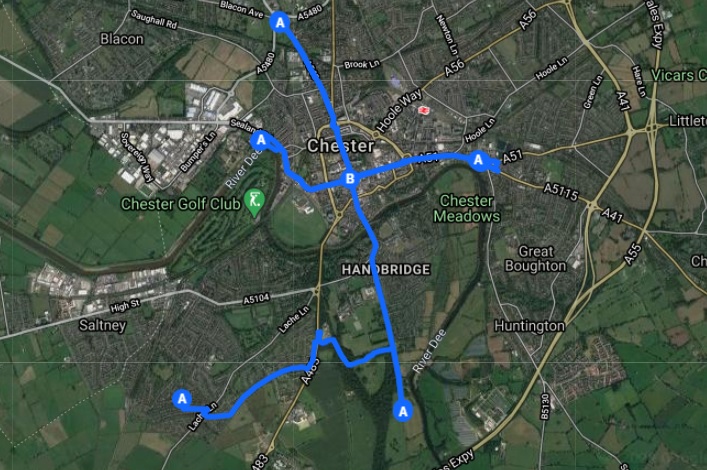
I won’t fully explain every point on the route, partly so I can do that another time and partly because this was really about the walking rather than visiting certain sites. However, in terms of the Roman landscape I walked from near the location of some farmsteads in Lache across to the large settlement at Heronbridge, my proper start point. From there I walked north on Watling Street through the cemeteries and quarries, across Old Dee Bridge and through the southern canabae into the centre of the fortress. Then I went north, roughly on the line of the Via Decumana, leaving the fortress through the north gate, and walked as far as Bache Brook before turning around and walking south into the fortress again then west along the Via Principalis, through the larger of the canabae, to the site of Chester’s historic water supply. Nearing the end now, I then walked back into the centre of Chester and continued west through the Watergate and out along the River Dee before returning to The Cross to finish.

According to my phone, the walk was about 16 km and it was a great way to get an appreciation of the scale of the Roman landscape. I’ll post a few pictures below with a few short observations.

Heronbridge > The Cross

Start point, the settlement at Heronbridge
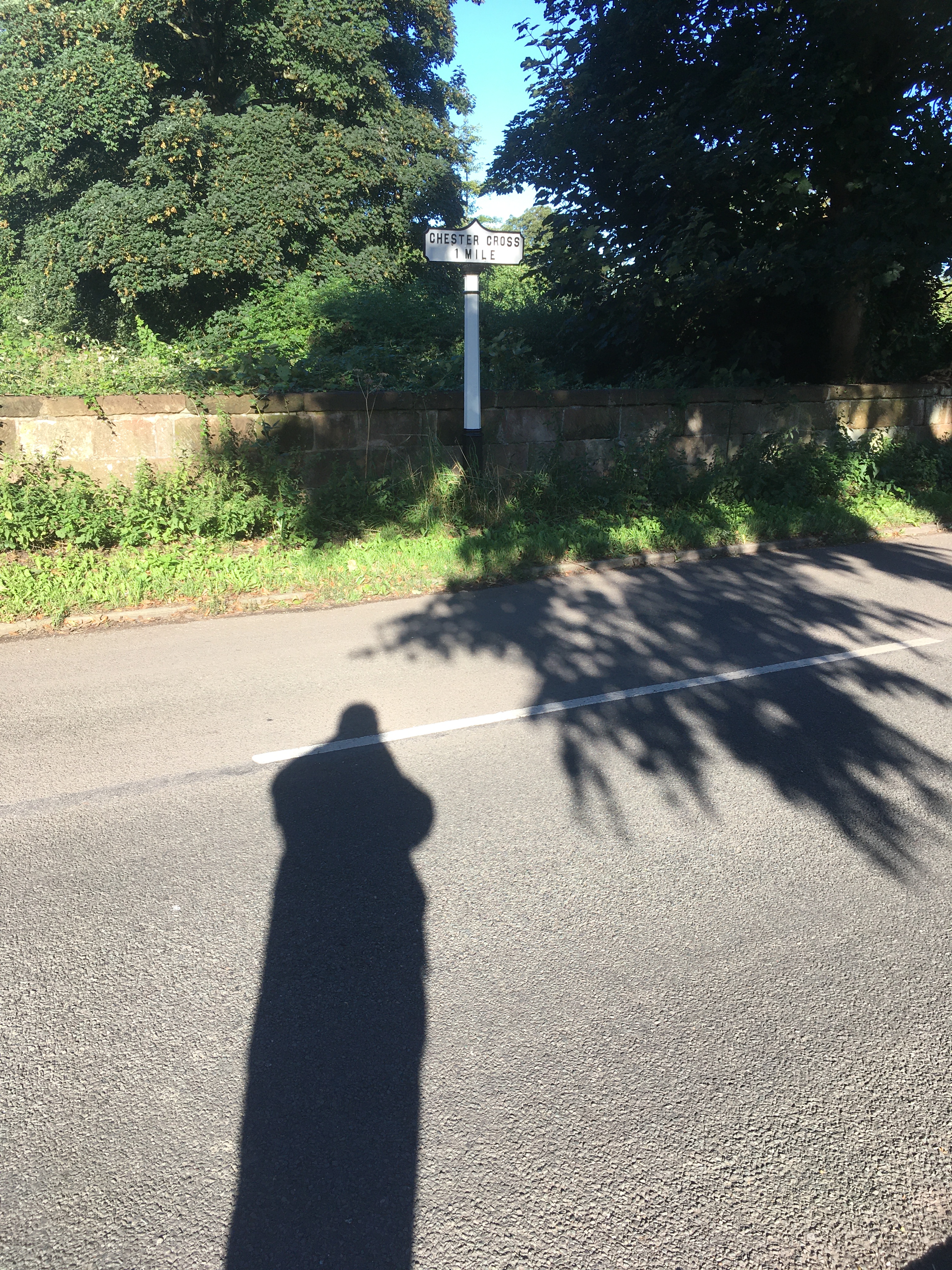
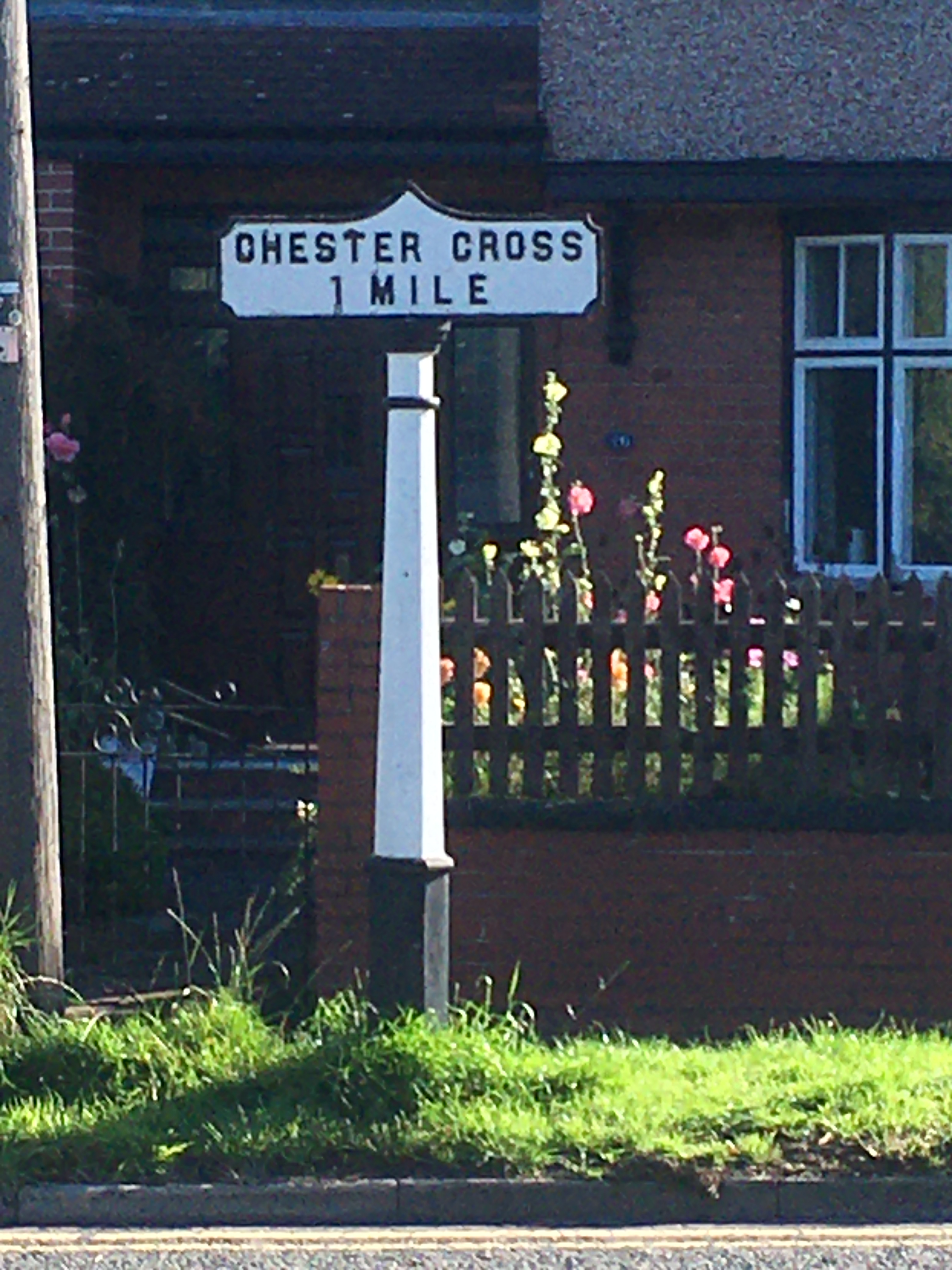
Along the historic Watling Street, one mile to The Cross

Walking in from the south, it it easy to gain some appreciation of the topography as you drop down towards the Dee then rise again towards the Roman city. It’s not always obvious that Chester is perched on a sandstone outcrop, but you can feel it in your legs if you walk.

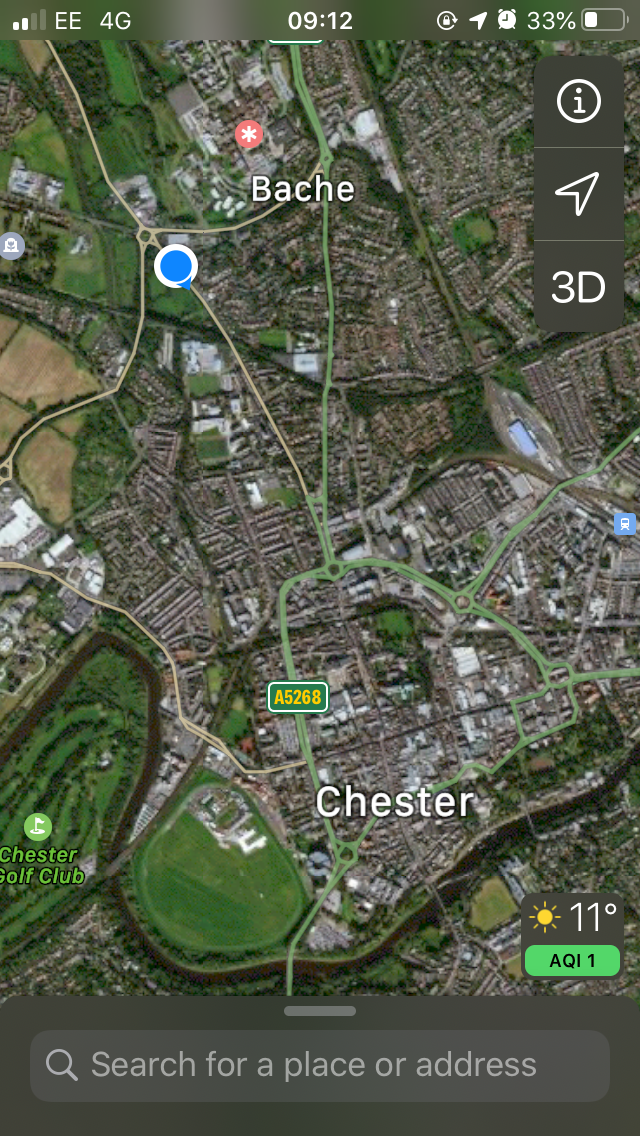
North to Bache Brook and back to The Cross

Bache Brook

Leaving Chester and dropping down the hill towards Bache Brook, you can really feel the sense of leaving the town, especially as you approach the watery landscape around the brook. The route of the Roman road north of here is not well known.

East to the water supply and back to The Cross

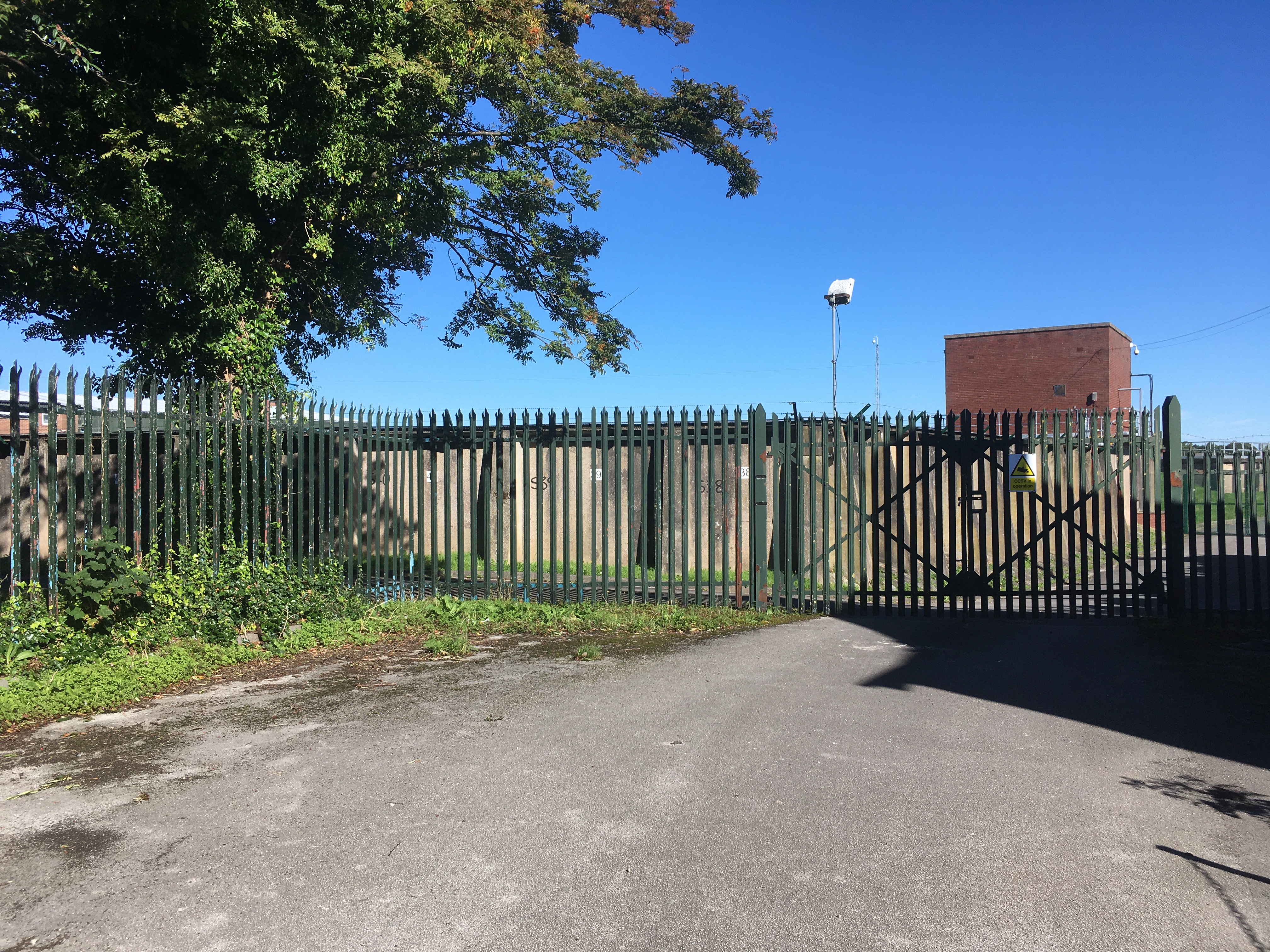
Dee Valley Water reservoir near to the Roman and later water supply.

West along the River Dee and back to The Cross

View along the Dee
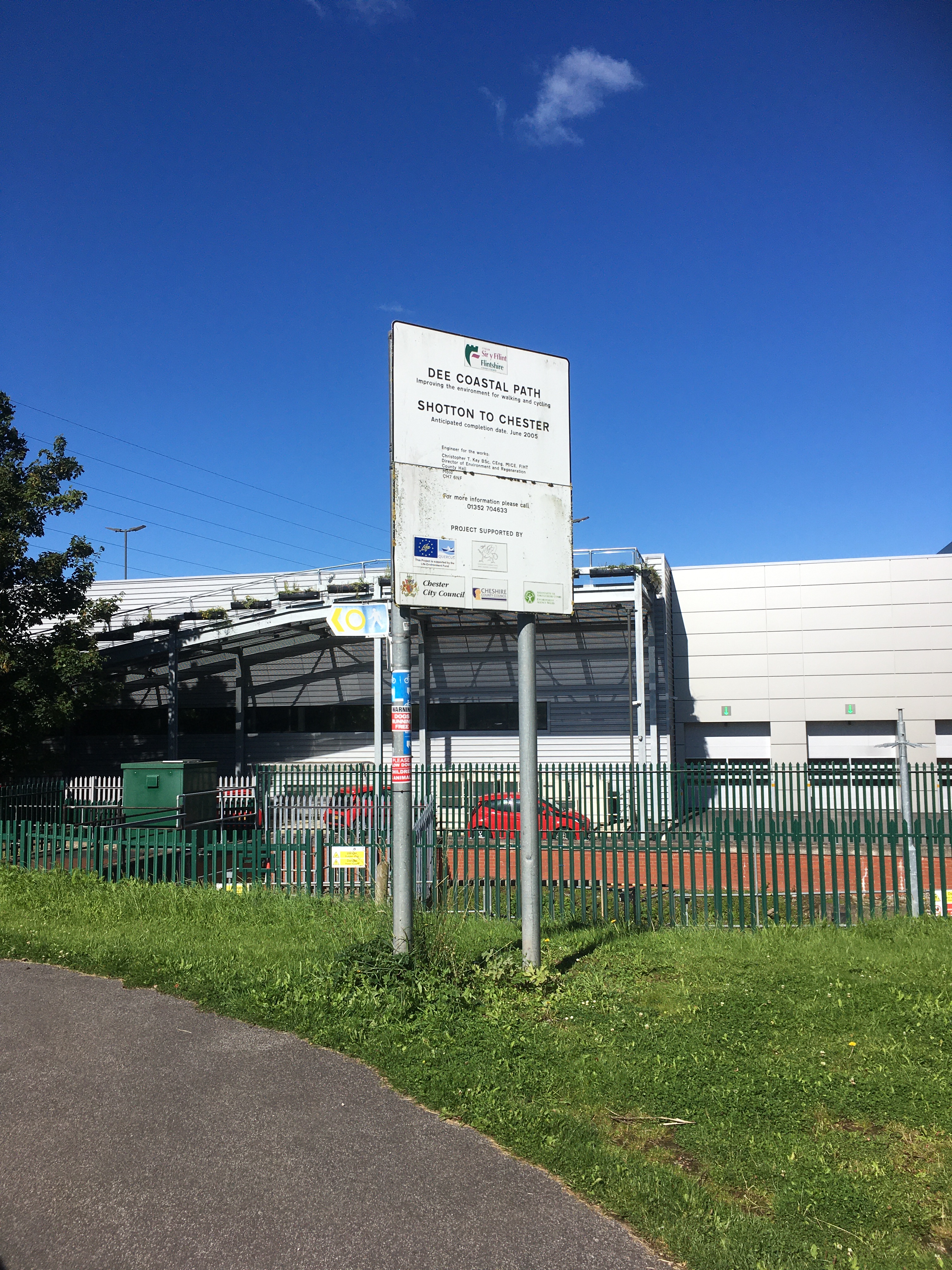
Start of the Coastal Path, one for another day
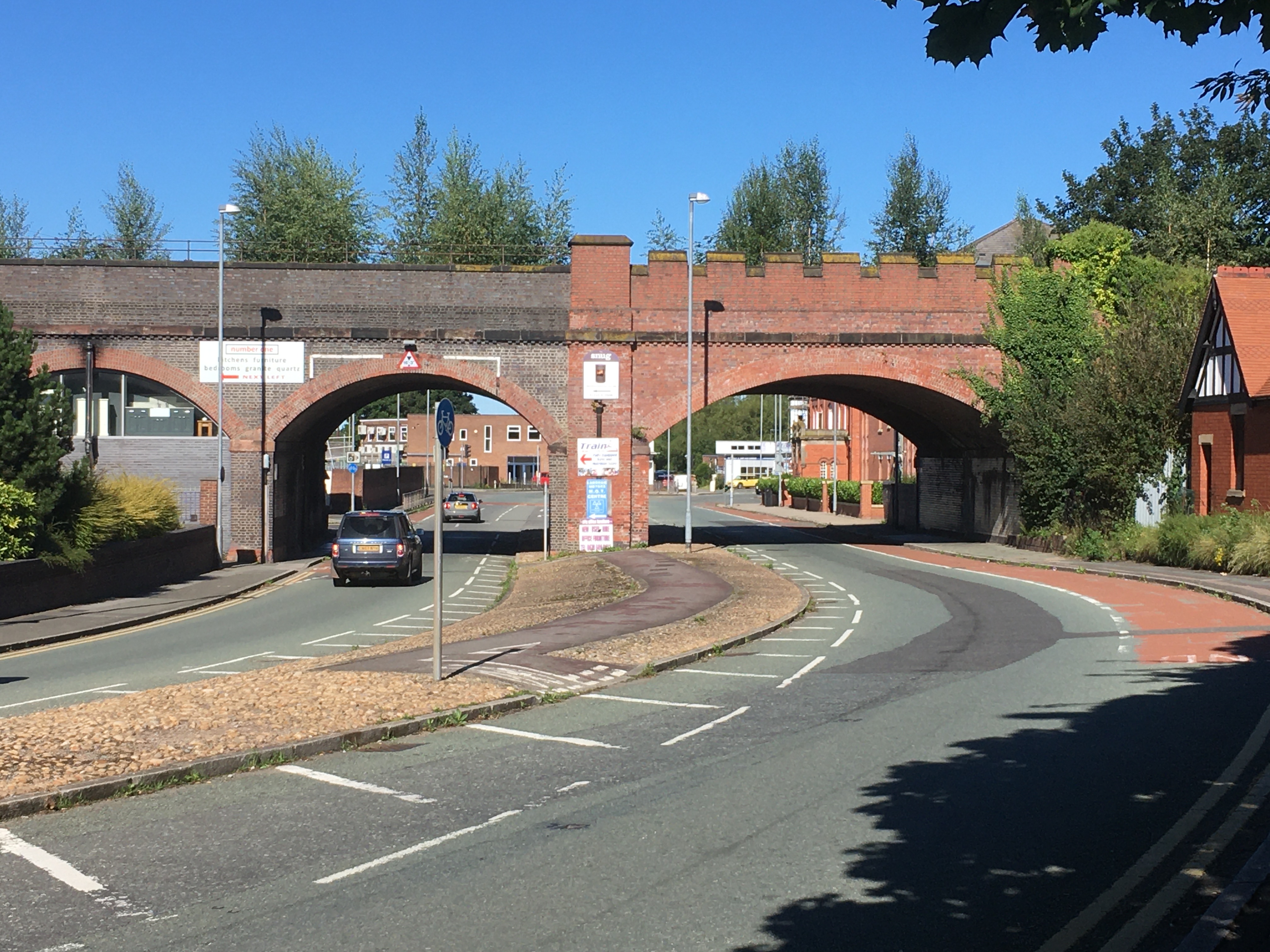
Railway viaduct on New Crane Street, rather reminiscent of the old Roman east gate (below)

The ‘watery-ness’ of this part of the landscape is evident, not just in the river and the nearby Water Tower, but in the canal, locks, and building names like Old Port Spa and Waterside Court.

That’s it! As I said at the top, this was about the walking, not the locations along the way, all of which I’m sure I’ll visit again.

Help me walk other period landscapes! Let me know if you have any ideas. Walking the Civil War defences and siegeworks is probably next for me.

Categories
Uncategorized

Investigating Chester: Borderlands, 14 August 2020

Looking at maps of Chester to see where I might walk, I became particularly interested in this patch of ground straddling the border between England and Wales.

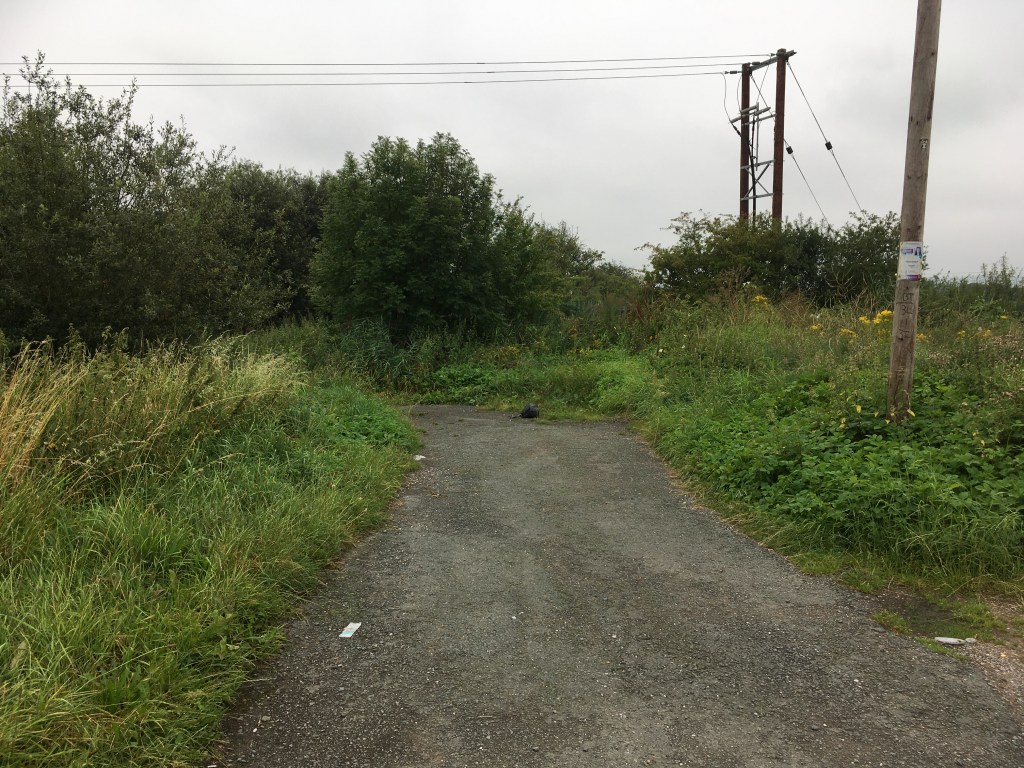
Trackway looking south-west
Trackway looking north-east

In my call for ideas to use in investigating Chester, Lorna Richardson had suggested having a look at Boundary Road, along which the border runs, and I did a bit of that as well, but this bit of land intrigued me most as the actual location of the border was, on Google maps at least, very hard to pin down.

Wales-England border at Saltney via Google maps and, below, the area I went to look at

I love little spaces like this. Clearly the border is in there somewhere and must relate to geographical features, but how? Has it ever mattered that there is this little trackway that leaves the road and crosses the border through the fields?

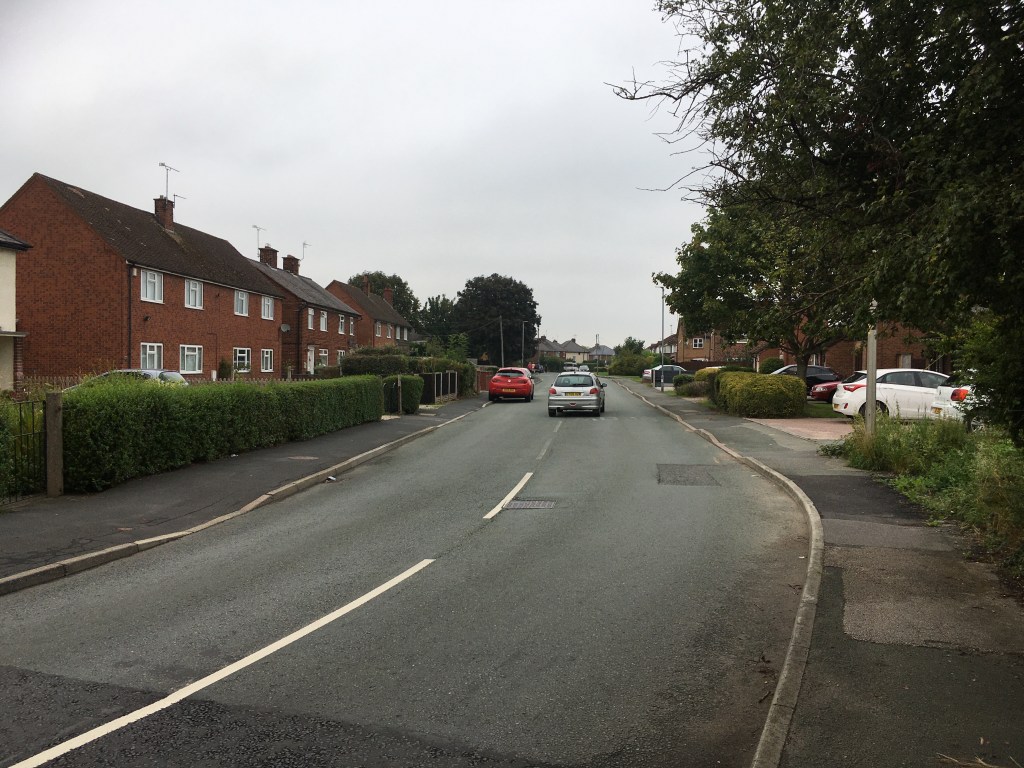
Boundary Road is, as I say, part of the Wales-England border. It looks like this:

Boundary Lane looking north, 14 August 2020

I was hoping to caption this image to say that the silver car had crossed the border to pass the red car, but the border actually runs along the pavement on the left of the photo, so the silver car has been in England the whole time (Wikipedia wrongly states that the border runs down the middle of the road). However the red car is parked with two of its wheels in a different country! Presumably the location of the border means that the road was here before the pavements, or at least the Welsh pavement which, interestingly, is in better condition than the English one.

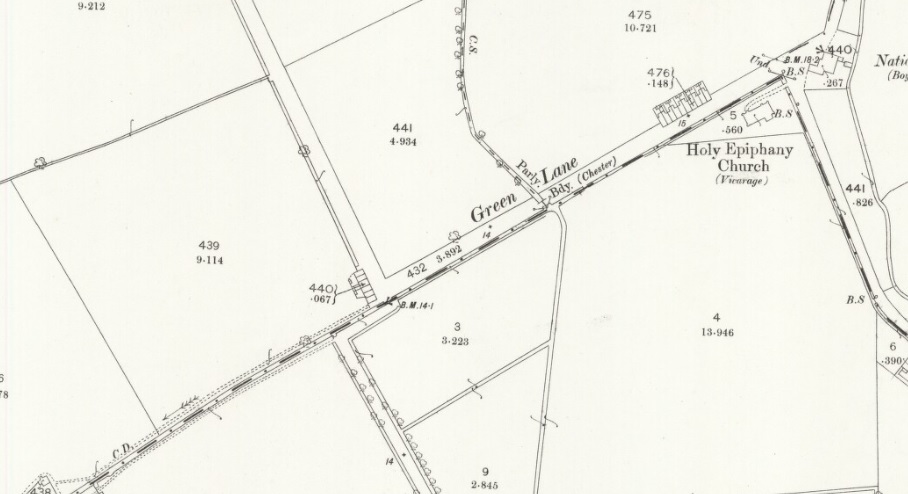
Looking at maps to work this space out, two things leapt out. The first is that Boundary Lane, so obviously named after the border that runs along it, is actually Foundary Lane, the location of Dee Iron Works and other industrial sites. Second, that the area I went out to look at is a mess of boundaries that I haven’t quite managed to unpick; the City of Chester boundary seems to be nearby as well as another parliamentary boundary and, of course, the border.

1871 OS showing Foundry Lane
1871 OS showing many boundaries

But we can also see here that that odd little space is literally underneath the border as shown on the map. Its dimensions seem to correlate to the thickness of the line. Doubtless just a coincidence. But also of interest is the trackway that leads at right angles off it, south-east into the fields. This trackway appears to still exist, but isn’t clearly visible from the road. At some point, this area has been part of an access route across the fields from Balderton into Saltney and beyond into Wales.

The 1883 and 1947 OS maps show the trackway just inside the English side of the border, while contemporary Google maps shows it in Wales. The latter might make most sense as it now runs along a ditch attached to Balderton Brook, a handy natural feature to refer to in the landscape.

1883 OS
1947 OS
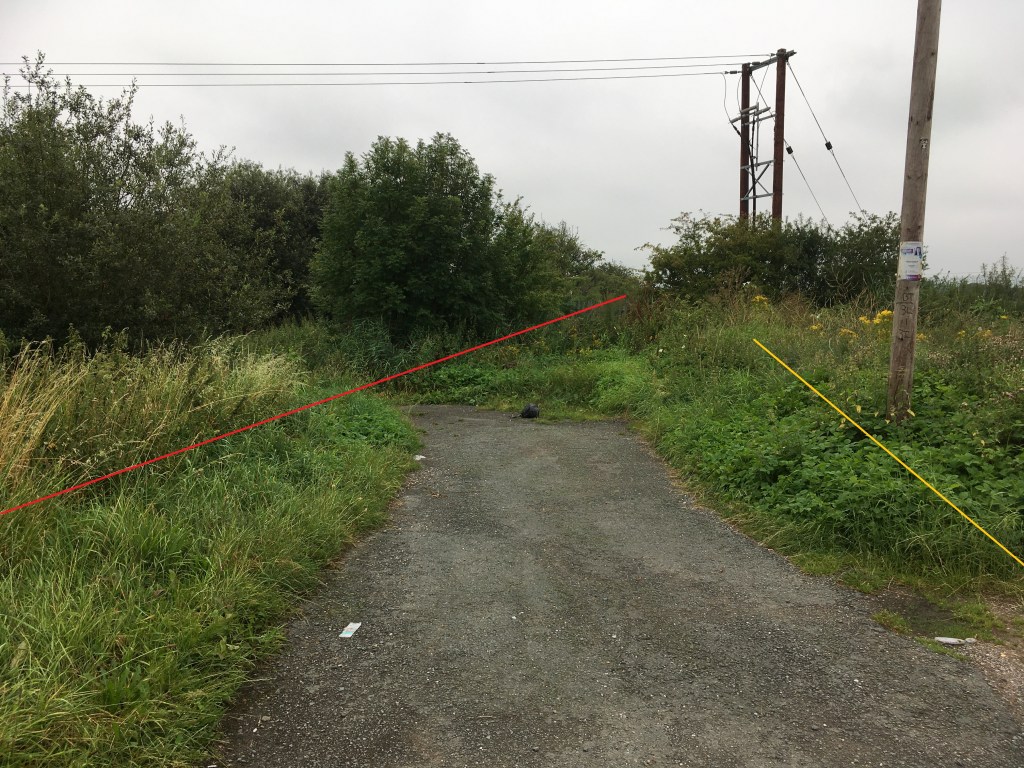
The trackway. The red line is the ditch, the border according to contemporary Google maps, and the yellow line is the border on historic OS map (if this is the same trackway).

So what’s going on? Well, there are three possibilities: 1) that either Google maps or the OS is wrong, 2) that the border has moved between 1947 and now, or 3) that the trackway on historic maps is actually adjacent to the one visible today, i.e. the layout of the site has changed.

I might find out one day. The border has been fixed since 1536 so my working hypothesis, without any real effort to check yet, is that the layout of the roads has changed and this trackway is what remains of the old Green Lane, kept here as access to the cross-field track to Balderton.

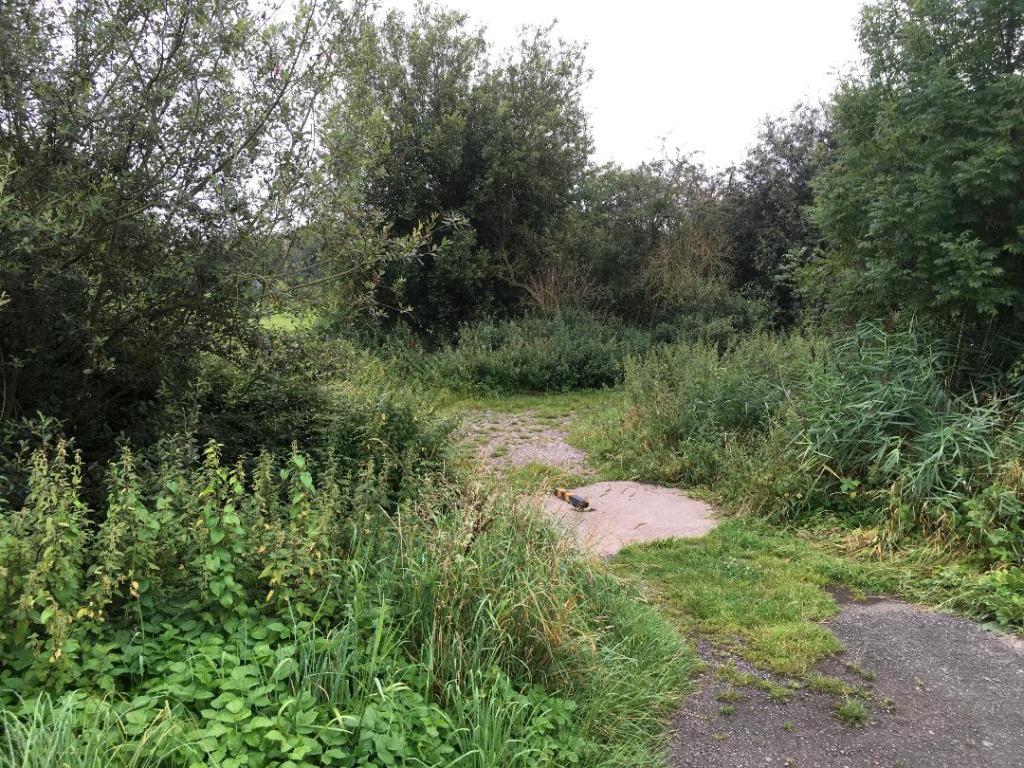
This, perhaps, is the trackway seen on historic OS maps. The ditch is to the right of the lighter nettles.

But, for now, I’m happy to leave it as an odd little spot between countries, and between past and present. It sparks joy in me to not know for sure either way and to imagine this little slab ‘bridge’ over the ditch as the border crossing between England and Wales.

Bridge crossing the Welsh-English border

I would love to find other, similar sites around Chester, sites whose identity is hard to decipher, for whatever reason. Do you know any?

Categories
Uncategorized

Investigating Chester: Visiting Minerva 08 August 2020

On our first Saturday back in Chester we decided to follow the advice of @sylviamdunn37 who responded to my call for ideas with a suggestion that we should:

Go over the Handbridge and find Minerva in Edgar’s Field.— sylvia dunn💚 (@sylviamdunn37) August 1, 2020

Despite being from near Chester and pretty heavily into history and archaeology growing up, I had no idea this was here, so had to drag Saini and Elvi along for a look. We walked from The Cross in the centre of town and, in terms of the Roman city, went south from the principia, leaving the historic fortress to cross the rather more recent Grosvenor Street into Lower Bridge Street. A bit less than 2000 years ago this part of Chester was an extra-mural area, though possible with its own wall, containing a large ‘coaching inn’ and other buildings. Basically, it was where you would stay when you arrived in Chester if you didn’t fancy the probably more mixed, informality of what is now Foregate Street. The area is now inside the later medieval wall line, so at the bottom of Lower Bridge Street we left the post-Roman walled City through the Georgian Bridgegate to cross the Old Dee Bridge into Handbridge.

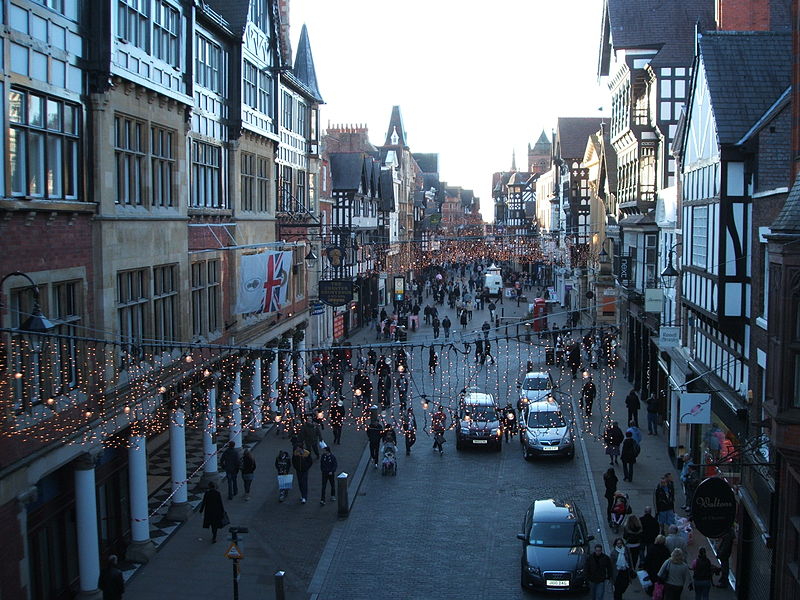
Lower Bridge Street looking through Bridgegate to Old Dee Bridge and Handbridge beyond

On your right as you come from Chester is Edgar’s Field, a small park whose entrance is dominated by a busy playground and the open balcony of The Ship Inn, both full of enthusiastic participants.

Edgar’s Field signage

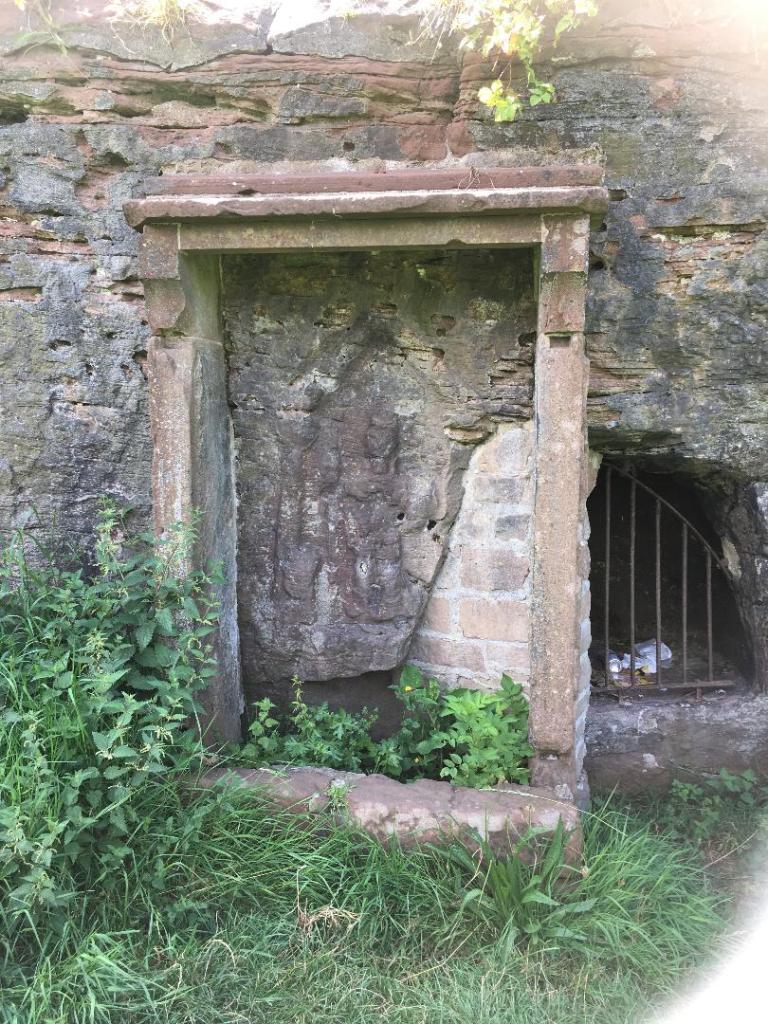
Beyond is Minerva, a shrine to the Roman goddess of, among other things, wisdom. The site is a former sandstone quarry and I find myself wondering whether building a shrine to the goddess of ‘defensive war’ in a quarry extracting stone for a legionary fortress was an attempt to build divine protection into the city walls. The popular interpretation is that it was carved by workers, but I can easily imagine the shrine holding more significance for those who commissioned the work.

Shrine to Minerva in the former sandstone quarry

Either way, it felt like we should leave an offering for Minerva to help ease our move into the life of the city. We left a 50p coin that we found on the floor on our way there and, one of Minerva’s symbols being an olive tree, poured a libation of olive oil.

Minerva, Edgar’s Field, Chester
Categories
Uncategorized

Help me investigate Chester!

We’re moving to Chester where I’m starting a new job. Now, Chester’s not exactly new to me, I grew up in a village not far away, but I’ve barely been back since I went to university and am really looking forward to discovering the city again as an adult. That’s where you come in!

I’m fascinated by the little projects, actions, tasks that people use to get to know new places. Maybe you walk a transect or around the outside. Perhaps you look at signposts, graffiti or churches. Some of you take photos, draw, write. Or maybe you listen. Collect? Look for traces of long-gone parts of town? In the past, I’ve done all sorts to get to know new places and spaces: collecting, writing, tracing, cleaning, I’m up for most things.

I would really love to hear your suggestions for things I could to to start the process of being in Chester again. Please comment below or on Twitter and we can get things going. I’ll consider anything, though might speak with you to tweak things to make them practicable. Feel free to make suggestions for me alone or for the whole family.

I’ll post about everything we do so you can see where your ideas lead…

A few things to think about:

  • I lived nearby until I was 18 so know my way around
  • But that knowledge is mostly restricted to the centre of Chester rather than the suburbs
  • COVID precautions apply, parts of the city centre have a one-way system
  • Things for the whole family need to not be much longer than an hour
  • I won’t post pictures of my daughter online
  • Please assume only basic technology and technical competence
  • If I’m on my own a 10 mile round trip is probably my limit for walking
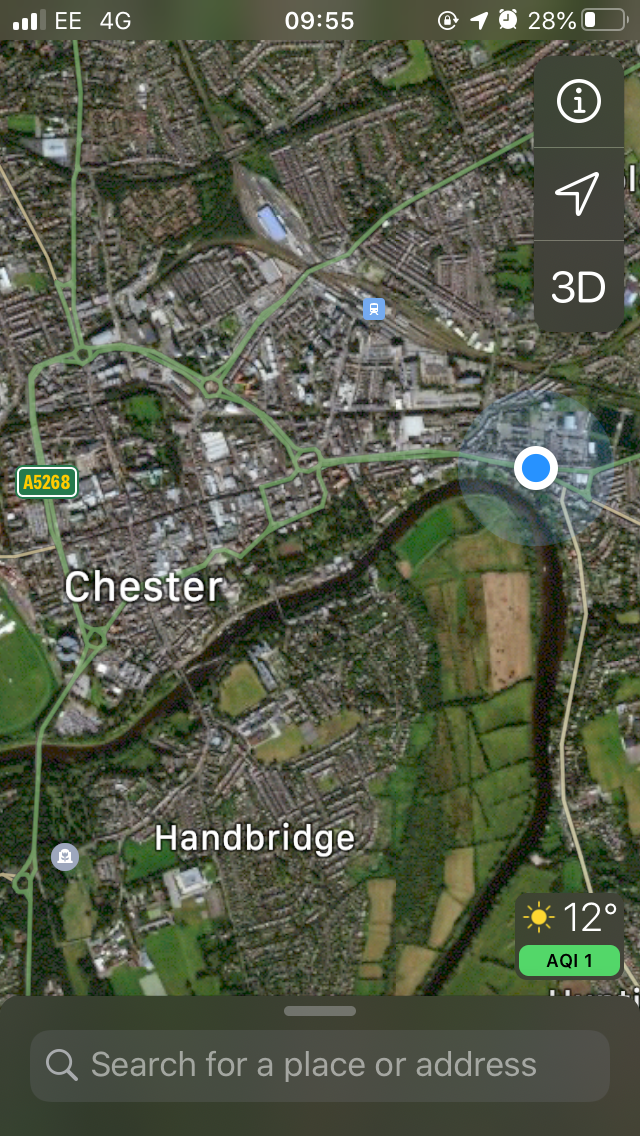
  • If you want to use the historic landscape as inspiration, I’ve marked the approximate location of our house on the 1899 OS below. It’s about 30 mins walk to the centre of Chester.

With that in mind, let me know your ideas. How should we get to know Chester?